
Introduction
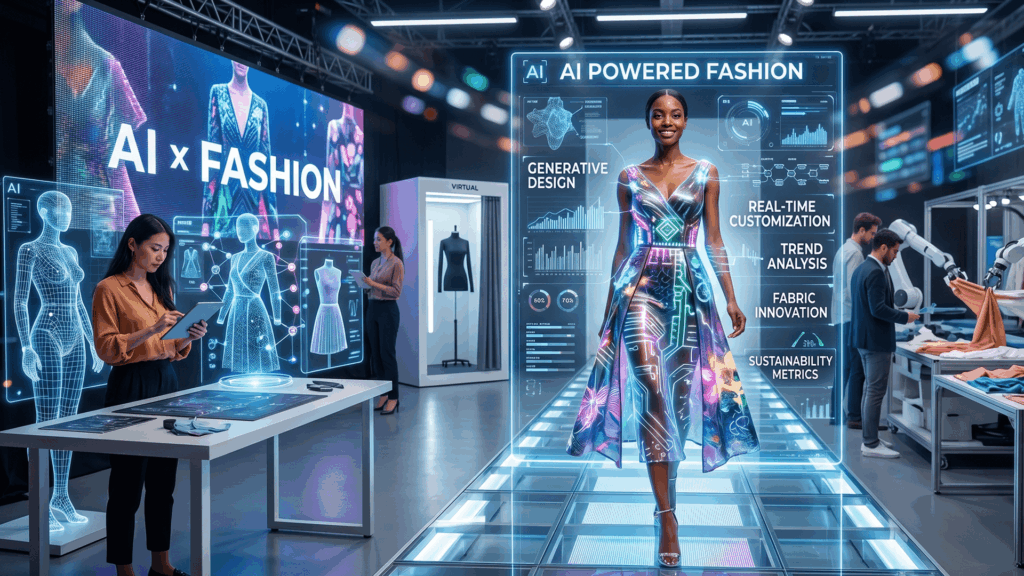
Artificial intelligence is changing the fashion world, from creation to distribution. Brands are using predictive algorithms, digital twins, GenAI, and AI Agents to forecast trends, automate decision-making processes, and provide personalized experiences that meet the tastes and expectations of modern consumers.
Personalization through AI has become essential for anyone looking to stand out in an increasingly competitive market that pays attention to individual needs. Savvy customers seek products that reflect their unique style and demand an engaging and tailored shopping experience.
The Importance of AI in the Customer Journey
In the customer journey, artificial intelligence plays a fundamental role. It not only enhances the relationship between brand and customer with personalized offers, but also optimizes internal processes such as production, inventory management, and distribution, ensuring efficiency and sustainability.
Sustainability as a Goal
True change occurs through sustainability: thanks to the optimization of production processes, material waste is drastically reduced. Technology also ensures a transparent and traceable supply chain, responding to the growing demand for ethics and awareness from consumers.
Key Points:
- Personalization of the shopping experience through AI to meet individual tastes
- Growing demand for customized products in the fashion sector
- Continuous innovation in the customer journey through artificial intelligence
- Sustainability as a strategic lever to reduce waste and improve supply chain transparency
This situation marks the beginning of a new era where technology and creativity come together to create real value for both consumers and brands.
The role of GenAI in customized design and design
GenAI is emerging as a revolutionary tool in fashion design, capable of accelerating creative processes and proposing innovative solutions while respecting the identity of brands. This technology allows for the rapid generation of trendy color palettes and new silhouettes, drastically reducing the time required for traditional experimentation.
Rapid creation of palettes and silhouettes
- The AI analyzes vast amounts of data related to emerging colors, materials, and styles, combining them into harmonious palettes that anticipate market preferences.
- It generates silhouette proposals based on existing models, but reinterprets them with contemporary variants suitable for specific targets or seasons.
- This speed allows designers to focus more on the creative aspect and less on the repetitive phases of design.
Respect and reinvention of stylistic identity
- AI is not limited to producing random content: it is trained on historical archives of the brand to understand aesthetic codes, preferred materials, and style guidelines.
- It offers variants that are consistent with the company’s philosophy but capable of innovating through new details or unusual combinations.
- For example, a brand known for minimalism can see AI proposals that maintain formal cleanliness but introduce bolder textures or color accents.
“Artificial intelligence acts as a digital co-designer: it amplifies human creativity without replacing it.”
Practical Examples
Some leading fashion brands have adopted GenAI platforms to develop capsule collections in record time. Companies report a significant reduction in iterative revisions thanks to immediate alignment between digital proposals and stylistic vision.
The AI’s ability to adapt to emerging trends while maintaining a strong connection with the brand’s identity transforms the creative process from static to dynamic. It shifts from a simple reproduction logic to a continuous stylistic evolution, driven by both data and human intuition.
With these potentialities, GenAI becomes an indispensable ally in personalized fashion design, responding to the growing need for unique and tailor-made products without sacrificing the speed required in a highly competitive market.
Predictive algorithms to anticipate trends and optimize production
Artificial intelligence is revolutionizing fashion from design to distribution. Thanks to predictive algorithms, brands can anticipate trends and offer customized experiences, gaining a significant competitive advantage.
How predictive algorithms work in the fashion industry
Predictive algorithms analyze vast amounts of data from various sources: social media, past sales, customer feedback, fashion events, and even weather conditions. Through machine learning models, these systems identify hidden patterns that indicate which styles, colors, or materials will be popular in future seasons.
- Data Collection: continuous monitoring of consumer preferences and emerging trends.
- Behavioral Analysis: evaluation of purchasing choices for specific audience segments.
- Dynamic Forecasting: real-time updating of forecasts based on new inputs and market changes.
This ability to anticipate the future allows designers and production managers to make quick and informed decisions, reducing the risk of wrong or unsold investments.
Optimization of Production and Reduction of Waste
The most significant impact of using predictive algorithms is seen in the optimization of production with AI. Precisely planning the quantity and type of materials needed means drastically limiting textile waste, one of the historical problems in the fashion industry.
- Intelligent textile cutting: thanks to accurate projections on the quantities to be produced, the cutting layout is optimized, avoiding unnecessary waste.
- Just-in-time production: agile factories that only work on confirmed or anticipated orders with high reliability.
- Reduction of unsold stock: less idle goods in warehouses means fewer resources wasted on disposal or forced discounts.
At the same time, this technology contributes to a more sustainable supply chain by relying on real data rather than assumptions or manual forecasts. AI thus enables not only improved economic efficiency but also a reduced environmental impact of the entire production cycle.
The application of predictive algorithms opens new avenues for a fashion sector that is increasingly responsive to market demands and attentive to sustainability, perfectly integrating with other technological innovations such as digital twins and the Internet of Things.
The role of AI Agents in customized fashion
The AI Agents represent one of the most advanced evolutions of artificial intelligence applied to the fashion sector. Unlike traditional AI systems, which perform specific tasks such as analyzing data or generating content, AI Agents are designed to operate autonomously, coordinating different activities and making real-time decisions.
In the fashion industry, AI Agents can integrate predictive algorithms, GenAI, IoT systems, and supply chain management platforms to create a highly responsive and intelligent ecosystem.
How AI Agents operate in the fashion system
AI Agents are capable of:
- analyzing emerging trends from social media, marketplaces, and fashion shows;
- sugesting color palettes and designs consistent with the brand’s identity;
- monitoring market demand in real-time;
- optimizing production, inventory, and distribution;
- personalizing marketing campaigns and customer experience;
- coordinating 3D configurators, augmented reality, and virtual showrooms.
This ability to orchestrate multiple tools simultaneously allows brands to reduce decision-making times and improve their adaptability to market changes.
AI Agent and advanced personalization
One of the most innovative aspects concerns the dynamic personalization of the customer experience. AI Agents can continuously learn from user behaviors, adapting suggestions, communication, and product proposals in real-time.
For example, an AI Agent can:
- propose personalized outfits based on previous purchases;
- automatically modify recommendations based on the season or emerging trends;
- optimize advertising campaigns for specific audience segments;
- assist the customer throughout the entire customer journey through intelligent chatbots or virtual assistants.
The AI Agent thus becomes an evolved intermediary between brand and consumer, capable of combining data, creativity, and automation to offer highly personalized experiences.
Operational efficiency and sustainability
AI Agents also contribute to the sustainability of the fashion supply chain. By coordinating production, logistics, and inventory management, they can reduce overproduction, textile waste, and energy consumption.
Thanks to continuous data processing, these systems allow for:
- optimize the consumption of raw materials;
- improve production planning;
- reduce unsold stock;
- promote just-in-time production models;
- increase transparency along the supply chain.
The integration of AI Agents in the fashion sector marks the transition from simple process automation to intelligent and adaptive management of the entire fashion ecosystem.
Digital twins and Digital Product Passport for a transparent and sustainable supply chain
These technologies are transforming fashion from design to distribution. Thanks to predictive algorithms, digital twins, and GenAI, brands anticipate trends and offer tailored experiences. The real turning point is sustainability: process optimization drastically reduces production waste. At the same time, technology ensures a transparent and traceable supply chain, responding to the need for ethics and awareness among modern consumers.
Digital twins: traceability and continuous monitoring
The digital twins represent a precise virtual replica of a physical product throughout its entire life cycle. In the fashion industry, this technology allows for:
- Real-time monitoring of the garment’s status during every stage of production and distribution;
- Collecting detailed data on materials, production processes, and environmental conditions;
- Timely identification of any defects or inefficiencies;
- Facilitating immediate corrective actions to minimize waste.
Through digital twins, brands can more effectively manage product quality and ensure complete traceability that meets the growing consumer demand for transparency.
Digital Product Passport: regulatory compliance and total transparency
The Digital Product Passport (DPP) is an innovative digital tool that accompanies each garment with certified information regarding:
- Material composition;
- Production methods;
- Environmental impact;
- Sustainability certifications;
- Instructions for recycling or reuse at the end of life.
This digital passport not only ensures compliance with increasingly stringent environmental and ethical regulations, but also provides clear communication to the end customer. The DPP thus becomes a fundamental element in building trust between brands and consumers, offering a completely transparent and responsible supply chain.
Synergy between GenAI, digital twins, and Digital Product Passport
The integration of GenAI, digital twins, and Digital Product Passport creates a technological ecosystem capable of:
- Anticipating market needs by predicting style evolutions while respecting the brand’s identity;
- Optimizing production by reducing both time and environmental impact;
- Ensuring constant control over the quality and origin of raw materials.
This technological combination translates into a personalized shopping experience as well as a concrete commitment to a more sustainable and ethical fashion. Modern consumers find clear answers to their questions about the origin, quality, and impact of the products they choose.
The integration of AI and Internet of Things for predictive maintenance and industrial resilience
The Internet of Things (IoT), combined with artificial intelligence, represents a decisive turning point in the management of production facilities in the fashion sector. Sensors distributed on machinery constantly collect operational data such as vibrations, temperatures, energy consumption, and operating speeds. This data is analyzed in real-time by AI models developed for predictive maintenance.
How Predictive Maintenance Works
- Continuous monitoring: IoT sensors continuously send information to the central system.
- Intelligent analysis: Machine learning algorithms identify abnormal patterns or early signs of malfunction.
- Failure prediction: AI estimates the most likely time when a component may fail, allowing for targeted interventions.
- Resource optimization: Unexpected machine breakdowns are avoided and maintenance is planned only when necessary.
This approach drastically reduces costs related to emergency repairs and production losses. The result is greater industrial resilience, which is the ability of facilities to quickly adapt to unforeseen events without compromising operational continuity.
Specific Advantages for the Fashion Industry
- The textile and packaging production lines are highly automated and sensitive to unplanned stops.
- Predictive maintenance allows for maintaining high quality standards by avoiding defects caused by malfunctions of the equipment.
- Intelligent asset management also contributes to sustainability by reducing energy waste due to inefficiencies.
Practical Example
A brand that uses IoT and AI can detect an anomaly in the fabric cutting system a few days before the actual breakdown. This allows for intervention during scheduled breaks, minimizing the impact on production and improving overall customer satisfaction.
The integration of AI and IoT thus becomes a key element in transforming traditional factories into smart environments capable of ensuring high performance through flexible and reliable processes.
Intelligent Inventory Management and AI-Based Distribution
The real-time inventory management with AI represents a revolution in the way fashion brands control and optimize their inventory. Thanks to advanced data analysis, artificial intelligence constantly monitors the quantities of available products, ongoing sales, and demand forecasts, providing precise and up-to-date information.
How does real-time monitoring with AI work?
- Continuous data collection: RFID sensors, barcode scanners, and ERP systems feed the AI platform with updated information on stock levels.
- Predictive analysis: algorithms predict peaks in demand or declines in interest based on market trends, seasonality, and purchasing behavior.
- Automatic order optimization: the system suggests ideal timing and quantities for restocking, avoiding both excess and shortage of stock.
- Integration with logistics: coordinates shipments to ensure efficient distribution from warehouses to retail locations or directly to the end customer.
Concrete benefits of intelligent inventory management
- Reduction of waste: minimize unsold items and returns thanks to targeted procurement.
- Greater agility: respond quickly to market fluctuations without continuous manual interventions.
- Improved customer experience: guaranteed availability of the most requested products at all times.
- Economic efficiency: containment of costs related to storage and logistics management.
A practical example comes from some brands that have implemented real-time monitoring systems with AI: they have recorded a significant decrease in unsold products and an increased ability to respond to customized customer requests. The result is a leaner, more sustainable supply chain focused on consumer satisfaction.
The adoption of these technologies marks a decisive step towards a smarter production model, where inventory is no longer a static element but an integral part of the dynamic decision-making process. Effectiveness in inventory management thus becomes a key tool for maintaining competitiveness and flexibility in the contemporary fashion sector.
Personalized shopping experiences through augmented reality and 3D configurators
Augmented Reality (AR) and 3D configurators are transforming the shopping experience in the fashion industry, offering consumers the ability to virtually try on clothing and accessories before making a purchase. These technologies allow for realistic visualization of products, customizing colors, materials, and details in real-time.
The integration with artificial intelligence and AI Agents makes the experience even more advanced. AI Agents can analyze preferences, behaviors, and market trends to suggest personalized products, sizes, and style combinations, tailoring the experience to the specific needs of each user.
These tools enhance confidence in online purchases, reduce uncertainty, and help decrease returns and logistical waste. At the same time, they promote a more engaging and interactive customer journey, transforming virtual showrooms, mobile apps, and digital events into immersive and tailored experiences.
The convergence of AR, 3D configurators, AI, and AI agents represents a decisive step towards a smarter, more sustainable fashion industry focused on authentic personalization.
Impact of GenAI on personalized fashion marketing
The GenAI fashion marketing is radically changing the way brands interact with their customers, providing powerful tools to create tailored content and strategies. A fundamental aspect concerns the automated and creative management of digital catalogs, which allows presenting different collections in real-time without the need for expensive and limited physical productions.
Dynamic digital catalogs
GenAI is transforming traditional catalogs into more flexible and efficient tools. Here’s how:
- Quick creation of variants: AI generates multiple versions of a garment based on colors, fabrics, and stylistic details, creating a virtual catalog that adapts to the preferences of the target audience.
- Customization for audience segments: generative models analyze behavior data and trends to propose targeted selections for specific niches or buyer personas.
- Reduction of logistical costs: by eliminating or reducing the production of physical prototypes, companies save resources and accelerate time-to-market.
Virtual events and tailored campaigns
With the help of GenAI, brands can now create highly engaging digital experiences. This includes:
- Virtual Fashion Shows: online events where garments are presented through videos or animations.
- Customized Showrooms: virtual spaces that showcase products based on the specific interests of each customer.
These innovative approaches not only amplify the reach of campaigns but also provide unique opportunities to engage with the audience.
Competitive Advantages in the Digital Age
Adopting GenAI in fashion marketing offers significant advantages:
- Maintain a continuous and relevant dialogue with consumers through constantly updated content.
- Experiment with new creative ideas without material or time limitations.
- Optimize advertising investments by focusing on personalized messages that increase conversion rates.
GenAI-based marketing eliminates many of the traditional barriers between creative production and commercial distribution. In this way, campaigns become more effective in communicating authentic and engaging stories, capable of turning simple visitors into loyal customers.
Sustainability as the Main Driver of the AI Revolution in Fashion
Sustainability in fashion through AI is emerging as one of the most crucial and innovative aspects of the industry. Artificial intelligence allows for a significant reduction in textile waste by intervening in various stages of production and optimizing resources.
Minimization of Textile Waste
- AI analyzes historical and current data to accurately predict the demand for materials, avoiding excessive orders.
- Advanced algorithms support intelligent cutting of fabrics, reducing unused leftovers through optimal arrangement of shapes on raw materials.
- Artificial vision systems identify defects in fabrics in real-time, allowing for more efficient reuse or targeted selection for secondary products.
Optimization of the Production Cycle
Artificial intelligence integrates data from different departments – from design to production to logistics – to improve planning and reduce energy and material waste. This approach contributes to:
- Avoid overproduction through accurate forecasts of trends and required volumes.
- Improve the management of raw materials through continuous monitoring systems that signal opportunities for recycling or reuse.
- Encourage more sustainable processing methods, for example by suggesting eco-friendly alternatives or less impactful production configurations.
Reduction of Environmental Impact
The adoption of AI in fashion is not limited to resource economy, but also extends to the control of emissions and the responsible use of water and energy during production. Intelligent systems:
- Monitor the entire production cycle allowing timely interventions to limit unnecessary consumption.
- Support the choice of low environmental impact materials by integrating data on origin, recyclability, and durability into decision-making processes.
- Facilitate transparency along the supply chain, a key element for certifying sustainable practices both towards consumers and increasingly stringent regulations.
The integration of artificial intelligence as a strategic lever for sustainability in fashion represents a decisive step towards more responsible production, aimed at meeting market needs without compromising the environmental future. This approach not only improves economic efficiency but also consolidates the ethical value of the brand in the eyes of modern consumers.
Conclusion
The evolution of AI applied to fashion is becoming an essential element for those who want to maintain competitiveness and sustainability in the fashion industry.
Thanks to tools like predictive algorithms, digital twins, GenAI, and AI Agents, brands are able to effectively respond to the increasingly complex needs of modern consumers.
The real turning point is represented by sustainability: optimizing production processes drastically reduces textile waste, contributing to a more ethical and conscious supply chain. This integrated approach between advanced technology and environmental responsibility transforms the customer journey into a unique and personalized experience, capable of combining innovation and respect for the planet.
The fashion of the future will be the one that successfully integrates artificial intelligence and sustainability, offering products that are not only beautiful and innovative but also respectful of the environment and people.
Choosing AI means embracing a vision of an ever-evolving industry, where every phase – from creative concept to distribution – is optimized to meet individual needs without compromising the global ecosystem. The real challenge will be to continue innovating while keeping transparency, social responsibility, and personalization at the center, essential values for gaining customer trust and loyalty in the long term.
Frequently Asked Questions
How is artificial intelligence revolutionizing the fashion industry?
Artificial intelligence is transforming fashion from design to distribution through technologies such as predictive algorithms, GenAI, AI Agent, digital twins, and IoT systems. These tools allow brands to anticipate trends, personalize the customer experience, optimize production, and improve sustainability and transparency in the supply chain.
What is the role of GenAI in fashion design?
GenAI supports designers in creating color palettes, silhouettes, and creative concepts that are consistent with the brand’s identity. Through trend analysis and market data, it accelerates creative processes and facilitates the development of customized collections.
What are AI Agents and how are they used in fashion?
AI Agents are intelligent systems capable of coordinating data, automation, and AI tools in real-time. In the fashion industry, they are used to personalize the customer journey, optimize supply chain and inventory management, improve marketing campaigns, and support strategic decisions.
How does AI contribute to sustainability in fashion?
AI helps reduce textile waste, overproduction, and energy consumption through predictive analysis, intelligent inventory management, and optimization of production processes. Technologies such as digital twins and Digital Product Passports also improve traceability and transparency in the supply chain.
How do augmented reality and 3D configurators improve the shopping experience?
Augmented reality and 3D configurators allow consumers to virtually view and customize clothing and accessories before making a purchase. Integrated with AI and AI Agents, these tools provide immersive and personalized experiences, increasing satisfaction, conversions, and reducing returns.