
Introduction
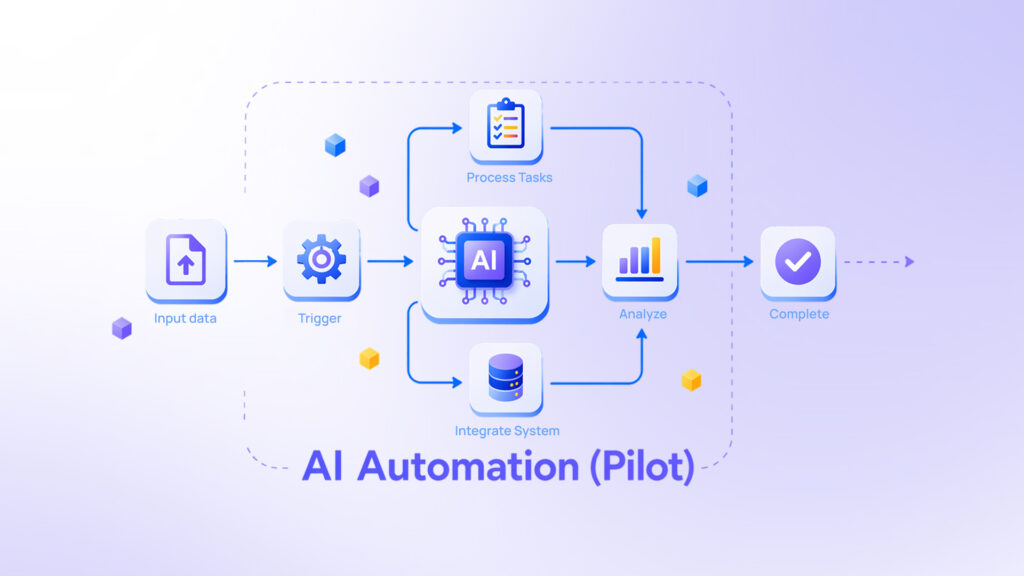
The pilot phase has ended. Here’s what awaits us for AI-based business automation. This step marks a crucial moment in the digital transformation of businesses, where artificial intelligence is no longer an isolated experiment, but becomes an integral part of operational and decision-making strategies.
AI automation is taking on an increasingly central role in companies. It is no longer just about testing technologies or evaluating potential benefits in small areas, but about implementing scalable solutions that improve processes, increase efficiency, and drive sustainable innovation.
Key points to consider:
- AI-based business automation is evolving from an experimental phase to a phase of full integration into workflows.
- The value generated by artificial intelligence depends on the ability to create synergies with existing data, infrastructures, and data-driven organizational cultures.
- Digital transformation is not just about technology, but a true cultural change that requires conscious leadership and strategies oriented towards continuous innovation.
The change in the role of AI in the business context implies greater responsibility in data management, increasing attention to security and transparency, and the need to adopt flexible operating models. Artificial intelligence thus becomes a strategic ally, capable of freeing human resources from repetitive tasks to focus on high-value-added objectives.
The end of the pilot phase marks the beginning of a new era for digital transformation: one in which AI not only supports processes but becomes their main driving force.
The pilot phase in AI automation: a step towards large-scale adoption
The pilot phase represents the first real testing ground for the integration of artificial intelligence into business processes. In this phase, companies implement AI solutions on a small scale, often in individual departments or for specific activities, with the aim of testing functionalities, evaluating benefits, and identifying critical issues in a controlled environment.
Characteristics of the pilot phase
- Time-limited and space-limited project: the experimentation concerns well-defined use cases, with clear and measurable objectives.
- Involvement of small teams: organizational impact is limited to contain risks and costs.
- Technical and operational validation: verification of the AI system’s ability to integrate with existing infrastructures and support workflows.
- Initial data collection: essential for refining models, improving performance, and adapting the algorithm to specific business needs.
Why many companies adopt a cautious approach
A prudent attitude during this phase arises from various motivations:
- Uncertainty about real results: the benefits promised by AI often remain theoretical without concrete proof in the field.
- Fear of operational disruptions: integrating new systems can generate misalignments or slowdowns in existing processes.
- Limited investments: the pilot phase requires limited resources to minimize financial exposure in case of failure.
- Resistance to change: corporate culture and internal skills can hinder rapid adoption.
Signs that indicate the transition beyond the experimental phase
The transition from experimentation to large-scale adoption occurs when concrete results emerge that justify greater investments:
- Measurable improvement in performance: increased efficiency, reduced errors or processing times.
- Satisfaction of involved users: positive feedback from staff who use AI tools on a daily basis.
- Seamless integration with existing IT systems: the ability of AI software to interact smoothly with databases, ERP or CRM systems.
- Demonstrated scalability: technical and organizational possibility to extend automation to other departments or use cases.
- Tangible economic value: savings on operational costs or increase in revenues attributable to the adoption of artificial intelligence.
The experience gained during the pilot phase allows companies to move from an experimental model to a more ambitious strategy based on the stable and widespread integration of AI within the organizational fabric. This change marks an important turning point in the digital maturity of the organization.
From experimental adoption to sustained digital transformation: the crucial role of data
Transitioning from isolated AI automation projects to an integrated and sustainable digital transformation requires a paradigm shift in the business approach. The challenge is not only to implement individual innovative solutions but to build an ecosystem in which artificial intelligence becomes an integral part of daily processes, generating sustained value over time.
How to overcome the experimental phase?
- Systemic integration: Pilot projects must evolve into solutions that interact with existing IT infrastructures, management systems, and operational workflows.
- Scalability and replicability: AI applications must be scalable across multiple departments or functions while maintaining consistency and efficiency.
- Organizational alignment: Involve cross-functional stakeholders to ensure that automation supports shared strategic objectives.
Sustained value of AI: the heart of business digital transformation
The success of AI automation is not only measured by speed or cost reduction but by the ability to generate lasting benefits. This means creating a sustained value that continuously improves products, services, and processes.
- Reduction of operational waste thanks to more precise and reliable automated processes.
- Improvement of customer experience through faster and more personalized responses.
- Advanced decision support based on predictive analytics and intelligent models.
The fundamental role of data in data-driven innovation
Data represents the lifeblood of AI-driven digital transformation. The quality, quantity, and accessibility of information determine the ability of intelligent solutions to learn, adapt, and improve over time.
- Centrality of integrated data: A well-designed data infrastructure allows for the consolidation of information from different sources, creating a unique and coherent asset.
- Data-driven innovation: Companies that adopt a data-driven strategy constantly innovate their business models by leveraging insights derived from advanced analytics.
- Intelligent automation: The interaction between updated data and AI algorithms enables increasingly sophisticated automations that can anticipate needs and optimize resources.
“Sustained digital transformation is not only based on cutting-edge technologies, but also on the ability to fuel them with strategic data that enables a virtuous cycle of continuous improvement.”
Without effective data management, even the best AI solutions risk remaining isolated or underutilized. The real challenge lies in orchestrating the entire information architecture to maximize the potential of AI automation throughout the entire business process. It is a concept that resonates as well
The Emergence of Agentic AI in Business Automation: Benefits and Challenges
Agentic AI represents a new frontier in the field of artificial intelligence-based automation. It differs from traditional forms of AI in its ability to act autonomously or semi-autonomously, making decisions and performing tasks without continuous supervision from a human operator.
What is Agentic AI?
- Systems designed to operate with a high degree of independence.
- Ability to learn, adapt, and take initiatives in specific contexts.
- Fundamental difference compared to more passive or reactive models: they do not just respond to inputs, but anticipate necessary actions to achieve defined goals.
This form of AI overcomes the limitations of traditional systems that require frequent manual intervention or only perform predefined repetitive tasks.
How autonomous and semi-autonomous systems operate
Agentic systems interact proactively with the business context:
- Execution of complex processes without the need for constant control.
- Seamless integration with existing IT infrastructures and digital workflows.
- Ability to handle exceptions and dynamic variables during task execution.
This approach allows for the transformation of the digital workforce, freeing up human resources from repetitive and low-value tasks. People can then focus on strategic, creative, or decision-making activities, improving productivity and job satisfaction.
Benefits for the organization
- Operational efficiency: reduction of errors and acceleration of processes.
- Scalability: possibility to extend automation to more areas thanks to the flexibility of agentic systems.
- Adaptability: ability to respond quickly to market changes or new internal needs.
The pilot phase has ended. Here’s what awaits us for AI-based business automation: the widespread adoption of agentic AI allows organizations not only to automate isolated processes but also to orchestrate a smart and dynamic network of autonomous solutions that work together synergistically.
Challenges to Address
The introduction of agentic AI brings some significant challenges:
- Need to clearly define the decision-making boundaries between machine and human.
- Management of technical complexity and integration with legacy systems.
- Continuous monitoring to ensure ethical compliance, security, and reliability.
- Cultural change within organizations, requiring training and adaptation of the workforce’s skills.
Accepting these challenges means preparing to fully leverage the transformative potential of agentic AI in the landscape of business automation.
Managing the Complexity of Multiple AI Systems: Opportunities and Governance Strategies
The growing adoption of autonomous or semi-autonomous artificial intelligence systems brings with it a significant challenge: automation sprawl, or the uncontrolled proliferation of multiple AI solutions within the organization. This phenomenon can generate inefficiencies, duplication of efforts, and difficulties in ensuring operational consistency.
Problems related to automation sprawl
- Functional overlap: multiple AI systems can perform similar tasks without centralized coordination, causing confusion and waste of resources.
- Difficulties in supervision: the multitude of systems makes it complex to monitor performance, security, and compliance with company policies.
- Limited integration: without effective governance, AI solutions risk operating in silos, preventing smooth data and information exchange between departments.
- Risks to security and compliance: fragmented control increases the likelihood of vulnerabilities, incidents, or regulatory violations.
The need for effective governance
Implementing a clear governance structure is essential to prevent automation sprawl from becoming an obstacle rather than a competitive advantage. Automation governance must define:
- Guidelines for the adoption and use of AI systems, including criteria for evaluating new solutions before integration.
- Specific roles and responsibilities for continuous monitoring, maintenance, and updating of automated tools.
- Policies for security, privacy, and regulatory compliance, ensuring transparency and accountability at every stage.
Practical strategies for coordinating AI systems
To achieve optimal use of available resources, a strategic approach to coordinating different AI solutions is necessary:
- Complete mapping of AI systems
- Inventorying all agentic or semi-autonomous systems in use allows for the identification of functional overlaps or gaps.
- Standardization of interfaces and protocols
- Facilitating interoperability through shared standards enables various AI agents to communicate effectively, avoiding information silos.
- Centralized management platforms
- Using unified dashboards for performance control, updates, and data flows facilitates quick and informed decision-making.
- Interfunctional coordination
- Promoting collaboration between IT, data science, operations, and business teams ensures that AI solutions are integrated into business processes coherently.
- Continuous monitoring of impact
- Regular assessments of the results achieved by each system allow for resource optimization by directing investments towards the most effective applications.
“The lack of structured governance risks turning automation into a disorganized set of inefficient technologies.”
The organization’s ability to orchestrate its AI systems not only determines operational efficiency but also future innovative potential. A well-governed system reduces the risk of waste and maximizes the value extracted from implemented technologies.
Security, Trust, and Responsibility in AI-based Automation: Building a Reliable Ecosystem
Security can no longer be considered a mere cost or accessory element in the adoption of AI automation. It becomes a strategic priority for companies that want to effectively and sustainably integrate artificial intelligence. The increasing complexity of agentic AI systems requires rethinking protection logics, as an error or vulnerability can have significant impacts both operationally and reputationally.
Trust in AI Automation: An Essential Pillar
To establish real trust in AI automation, it is necessary to go beyond mere technical efficiency. It requires:
- Predictive Transparency: Automated decisions must be understandable and predictable, allowing users and managers to evaluate outcomes and anticipate undesirable behaviors.
- Accountability: Clearly define who is responsible for the actions taken by intelligent systems and what the protocols are for intervening in case of malfunctions or anomalies.
- Regulatory Compliance: Comply with existing regulations on privacy, data protection, and cybersecurity to avoid legal risks and penalties.
These elements create an environment where the adoption of AI does not generate distrust but rather translates into added value for the entire organization.
Predictive Transparency as a Control Tool
Predictive transparency allows explaining the “why” behind every output generated by AI, facilitating continuous monitoring and avoiding surprises. For example, in financial or healthcare fields, being able to detail the criteria used by an agentic AI system is essential to maintain high ethical standards.
Advanced AI interpretability tools help make these decision-making processes visible even to those without in-depth technical expertise. This reduces the risk of blind delegation to technology, increasing the sense of control by human operators.
Ethical Responsibility and Corporate Governance
Corporate ethics must be integrated with the management of AI security through:
- Clear policies that regulate the responsible use of automation.
- Continuous training to raise awareness among employees and managers about the risks and opportunities associated with artificial intelligence.
- Implementation of internal frameworks that balance technological innovation with fundamental values such as fairness, transparency, and respect for privacy.
More mature organizations recognize that security and responsibility are competitive advantages that can strengthen relationships with customers, partners, and stakeholders.
“Trust is not taken for granted; it is built over time through concrete actions and rigorous governance.”
Building a reliable ecosystem around AI automation means combining technical measures with a corporate culture oriented towards transparency, predictability, and accountability. This approach transforms the relationship between humans and machines from simple technical interaction to true strategic collaboration.
Accelerating Product Development with Artificial Intelligence: Competitive Advantages Not to Be Underestimated
The acceleration of product development with AI is one of the most revolutionary aspects of the adoption of automation based on artificial intelligence. Agentic AI, in particular, has proven to significantly reduce time-to-market, allowing companies to respond quickly and accurately to changing customer needs.
Reduction of time-to-market
Agentic AI operates autonomously or semi-autonomously on key processes of product development, such as:
- Rapid analysis and synthesis of large volumes of data to identify emerging trends
- Virtual simulations and prototyping based on predictive models
- Automation in managing repetitive tasks and coordinating between multidisciplinary teams
These systems not only speed up the initial phases of research and design but also optimize the testing phase, enabling shorter feedback cycles and more effective iterations.
Concrete examples of production optimization
Manufacturing companies that have integrated agentic AI into their production processes have reported tangible improvements, such as:
- 30% reduction in the time required to go from concept to production thanks to automated workflows that simultaneously manage technical approvals and regulatory compliance.
- Optimization of the supply chain through intelligent systems that anticipate changes in demand and automatically adjust orders to suppliers.
- Implementation of internal AI chatbots to support the R&D team in quickly resolving technical issues, reducing downtime.
In the software sector, intelligent automation facilitates continuous deployment by reducing manual errors and accelerating the development cycle through AI-driven automated testing.
Competitive advantages derived from seamless integration of AI
The ability to seamlessly integrate agentic AI with existing infrastructures allows companies not only to improve operational efficiency but also to constantly innovate their product portfolio. These advantages include:
- Greater agility in responding to specific market demands or customer customizations
- Ability to experiment with new business models thanks to real-time generated insights
- Reduction of overall costs related to human errors and delays in decision-making processes
The pilot phase has ended. Here’s what awaits us for AI-based business automation: a landscape where product development becomes increasingly dynamic, adaptive, and competitive thanks to the acceleration provided by agent-based artificial intelligence.
Practical strategies for integrating AI into the daily operational processes of companies
The integration of AI into business processes requires a methodical approach that allows for the insertion of intelligent automation without interrupting the established operational flow. Companies must adopt specific best practices to avoid misalignments and ensure that AI becomes a natural support for daily activities.
Best practices for incorporating artificial intelligence
- Detailed analysis of existing processes: Before introducing any AI solution, it is essential to accurately map the current workflows. This allows for the identification of areas most suitable for automation and any critical issues to be addressed.
- Gradual and modular implementation: Starting with small automated modules or tasks reduces risks and allows for testing solutions in real-world contexts while maintaining operational continuity.
- Continuous performance monitoring: Integration does not end with implementation; constant monitoring is needed to assess the effectiveness of AI and make timely adjustments.
- Targeted training for staff: Making the team aware of new technologies and their functionalities helps overcome resistance and facilitates daily adoption.
Coordination between IT, business, and C-suite teams
The effective adoption of artificial intelligence involves strong alignment between different business functions:
- Team IT: Responsible for technical selection, integration with existing infrastructures, and security management. They must ensure that AI solutions are scalable and compatible with legacy systems.
- Business Unit: Provides essential operational knowledge to define clear and measurable objectives. Their involvement ensures that AI addresses concrete needs, improving productivity and quality of work.
- C-suite leader: Acts as strategic guidance, promoting a culture oriented towards innovation. Their vision facilitates the removal of organizational obstacles and ensures adequate resources.
Organizational tools to orchestrate automation
Orchestrating automated activities means coordinating data flows, decision-making processes, and human interventions in a harmonious way. Some key tools include:
- Integrated Automation Platforms (RPA + AI): They allow the creation of intelligent workflows that combine software robotics with the predictive or decision-making capabilities of artificial intelligence.
- Centralized Control Dashboards: They provide real-time visibility into the performance of AI systems, facilitating quick interventions in case of anomalies or inefficiencies.
- Digital Collaboration Systems: They promote continuous interaction between different teams, maintaining shared updates on developments, problems, and successes related to automation.
- AI Governance Frameworks: They define roles, responsibilities, and protocols to ensure transparency, security, and compliance during all operational phases.
The success of AI integration depends on the balance between advanced technology and agile organization. Only a structured approach that takes into account the cross-cutting needs of the business can transform the promise of intelligent automation into concrete results in daily business operations.
Current priorities for scaling the adoption of agentic AI in businesses: future perspectives on AI-based automation
Companies that have successfully completed the pilot phase are now facing a series of strategic priorities in order to effectively scale the adoption of agentic AI. These objectives are often identified by C-suite leaders and IT leaders as fundamental elements to ensure continuity, value, and sustainability in the digital transformation journey.
Priorities reported by business leaders
1. Alignment between technology and business
The push towards massive adoption of agentic AI requires a precise balance between technological innovation and organizational change. It is not enough to introduce new autonomous systems if their function is not integrated with business objectives, team competencies, and existing processes.
2. Clear definition of the digital transformation roadmap
A detailed and shared roadmap allows for planning milestones, resources, success metrics, and necessary adjustments along the way. Leaders emphasize the importance of a strategic vision that covers not only the technological aspect but also the cultural and operational aspects.
3. Change management and continuous training
Agentic automation modifies roles, responsibilities, and workflows. It is essential to accompany employees with targeted training programs and transparent communication to reduce internal resistance and enhance new digital skills.
4. Systemic Integration and Interoperability
Scaling agentic AI means enabling different autonomous or semi-autonomous systems to communicate harmoniously. Leaders aim for solutions that facilitate centralized management of tools, avoiding overlaps or inefficiencies due to uncontrolled proliferation (automation sprawl).
5. Continuous Monitoring of Performance and Generated Value
The effectiveness of automation should be evaluated with precise indicators related to real results. Decision makers emphasize the need for dynamic dashboards that allow constant control and rapid adaptation of implemented strategies.
Balancing Technological Innovation and Organizational Management
The main challenge in scaling agentic AI is not only technical but also cultural. Companies must maintain a dual focus:
- On one hand, investing in the most advanced technologies to make systems capable of operating with increasing autonomy;
- On the other hand, the ability to lead change within human teams, redefining responsibilities without creating disorientation.
C-suite leaders emphasize how this balance is crucial to avoid obstacles such as fragmentation of efforts or loss of trust from collaborators.
Strategic vision for the future
Looking ahead, companies see agentic AI as a key element for:
- improving responsiveness to markets,
- accelerating product development,
- increasing productivity by freeing up human resources from repetitive tasks.
For this reason, the scalability of AI automation is perceived as a path to be carefully built, starting from the definition of clear priorities that include:
- integrated governance,
- data security,
- regulatory compliance,
- ethics in the use of artificial intelligence.
In summary, those who lead the business must orchestrate technology, people, and processes according to a coherent roadmap that makes the growth of agentic AI sustainable over time. Without this strategic vision, there is a risk of having isolated solutions that fail to generate lasting value or truly support the desired digital transformation.
Conclusion
Fully embracing AI automation means positioning your company at the center of a digital revolution that is no longer just experimental, but strategic and essential for competing in the global market. The future of AI automation is shaping up to be a powerful engine of innovation that transforms processes, organizational models, and the digital workforce itself, redefining roles and skills.
The real impact of artificial intelligence in business goes beyond simple operational efficiency: it translates into the ability to respond quickly to changes, anticipate customer needs, and free up human resources from repetitive tasks to higher value-added activities. The pilot phase is over; now it is a matter of scaling up with awareness and responsibility.
To ensure effective and sustainable adoption, it is essential to:
- Implement AI systems ethically, ensuring transparency, security, and respect for privacy.
- Build trust through solid governance that includes accountability and continuous control.
- Facilitate a cultural change that involves all business functions, integrating data, processes, and people.
- Support continuous innovation through targeted investments in agentic AI and intelligent automation.
Future challenges involve managing the increasing complexity of multiple AI systems, maintaining high standards of security and compliance, as well as balancing automation with human intervention. At the same time, the opportunities offered by technological evolution are extraordinary: new business models, faster time-to-market for products, greater strategic agility.
“Artificial intelligence is not just technology: it is a transformative lever for business success.”
Looking ahead means preparing for an ecosystem where AI automation is no longer an optional choice but a central element of competitiveness. Are you ready to take on this challenge? The path is laid out. It’s up to you to decide how to best navigate it.
Frequently Asked Questions
What is the pilot phase in AI-based business automation and why is it important?
The pilot phase in AI automation represents an experimental period in which companies test the integration of artificial intelligence into their processes. It is crucial because it allows for the evaluation of benefits, identification of critical issues, and preparation for large-scale adoption with a cautious approach.
How is agentic AI transforming business automation?
Agentic AI refers to autonomous or semi-autonomous systems that operate independently, freeing human resources from repetitive tasks. This technology promotes a more efficient digital workforce, improving productivity and accelerating digital transformation.
What is the role of data in digitally supported transformation through AI?
Data is at the heart of AI-driven digital transformation. It enables the generation of sustainable value and data-driven innovation, facilitating the transition from isolated projects to integrated and long-lasting automation.
What strategies are recommended to manage the complexity arising from the presence of multiple AI systems in a company?
To avoid automation sprawl and ensure optimal resource utilization, it is essential to adopt effective governance that synergistically coordinates the different AI systems, implementing practical strategies for integration and continuous monitoring.
Why are security, trust, and accountability fundamental in AI-based automation?
Security is no longer just a cost but a priority to protect sensitive data and maintain regulatory compliance. Building trust through transparency, predictability, and accountability is crucial to creating a reliable ecosystem that supports business ethics and acceptance of automation.
How does artificial intelligence accelerate product development and what competitive advantages arise from it?
Agentic AI reduces time-to-market through the intelligent automation of production processes. This allows companies to be more agile and responsive to customer needs, gaining significant competitive advantages through continuous innovation and reduced time-to-market.