
Introduction
Artificial Intelligence (AI) and digital twins are transforming the manufacturing sector, defining the future of manufacturing with new standards of efficiency, resilience, and adaptability.
The integrated adoption of AI and digital twins is essential to remain competitive in a rapidly evolving global market. These tools not only improve productivity but also create safer, more sustainable, and innovation-oriented factories.
Artificial Intelligence and Digital Twins in Modern Manufacturing
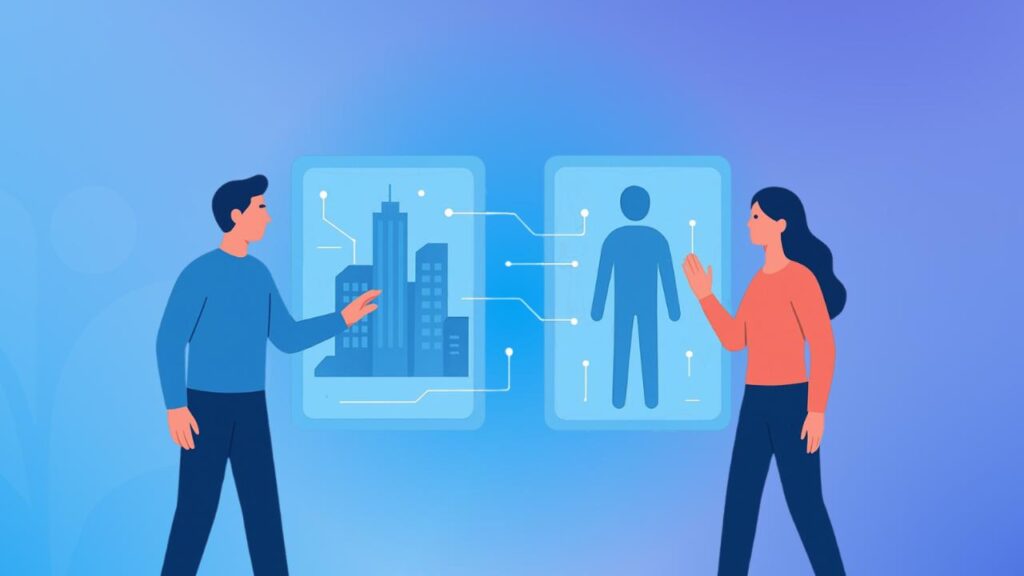
The concept of a digital twin refers to an accurate and dynamic digital replica of a physical system, process, or product. In modern manufacturing, it represents a key element of Industry 4.5, where the convergence between digital technology and physical production allows for monitoring, simulating, and optimizing every stage of the production cycle in real-time.
Role of Digital Twins in Industry 4.5
Digital twins play a fundamental role in Industry 4.5:
- Create virtual replicas of machinery, production lines, and entire plants.
- Continuously integrate with data from IoT sensors and control systems.
- Support operational decisions through predictive simulations.
- Enable predictive maintenance models to minimize equipment downtime.
Enhancement through Artificial Intelligence
Artificial intelligence transforms digital twins from simple static models to proactive and adaptive tools:
- Performs advanced analysis of real-time collected data to identify hidden patterns.
- Uses predictive modeling to anticipate failures or inefficiencies before they occur.
- Dynamically optimizes production processes in response to changes in demand or environmental conditions.
- Continuously learns to improve operational effectiveness over time.
AI-powered digital twins enable superior resilience of plants, allowing for rapid recalibrations and adaptations without significant interruptions.
Impact on Production and Intelligent Automation
The integration of artificial intelligence and digital twin technology profoundly changes the way production is managed:
- Greater operational efficiency thanks to automated processes based on real-time data.
- Reduction of waste and improvement of quality through continuous monitoring and virtual simulations.
- Intelligent automation that coordinates collaborative robots (cobots) and autonomous systems to increase productivity and safety.
- Facilitation of mass customization with faster and more flexible response times.
This synergy is the foundation for a manufacturing digital transformation that shifts the focus from reactivity to proactivity, making factories more agile, resilient, and competitive in the digital age.
The Key Technologies Driving the Evolution of Manufacturing
Emerging technologies that are transforming the manufacturing sector, creating new opportunities for efficiency, safety, and innovation. These technological solutions integrate artificial intelligence with advanced systems to meet the needs of an increasingly dynamic and complex industry.
Collaborative Cobots
- Collaborative robots (cobots) are designed to work side by side with human operators.
- They improve safety in the factory by reducing the risk of accidents.
- They increase productivity due to their ability to quickly adapt to changes in production processes without the need for complex programming.
Agentic AI and Physical AI
- Agentic AI refers to autonomous systems capable of making independent decisions based on real-time data and predictive models.
- Physical AI integrates intelligent capabilities directly into physical devices, allowing for immediate responses to environmental or operational changes.
- These systems are fundamental for the development of autonomous and resilient factories.
Edge Computing
- Edge computing allows for data processing directly at the points of collection, avoiding delays related to transfer to centralized cloud services.
- It supports critical applications that require minimal latency, such as real-time quality control and predictive maintenance.
- It enhances the ability of digital twins to operate with instantly updated data.
Generative AI and Quantum Computing
- Generative AI accelerates the design and optimization of production processes by generating innovative solutions from large amounts of data.
- It facilitates complex simulations and customizations even in traditional sectors.
- Quantum computing enhances computational capabilities to solve complex industrial problems, such as optimizing the supply chain and dynamically managing resources.
These technologies are driving manufacturing towards an adaptive, intelligent, and highly integrated model. The convergence of cobots, AI agents, edge computing, generative AI, and quantum computing creates a digital ecosystem capable of anticipating events, optimizing resources, and improving the quality of the final product.
The Five Fundamental Trends of the Future of Manufacturing
Five key trends are identified that will redefine manufacturing in the coming years, marking the advent of a new industrial era characterized by advanced automation, artificial intelligence, and deep digitalization.
1. Industry 4.5: The New Phase of Industrial Evolution
Industry 4.5 represents an evolutionary leap compared to Industry 4.0, integrating AI and automation to create anticipatory enterprises capable of predicting events and adapting in real-time to changes in the market and production. This new phase goes beyond simple digitization of processes, aiming for autonomous and interconnected systems that continuously optimize operations.
2. Digital Twins as the Connective Tissue of Real-Time Data
Digital twins assume the role of real-time data fabric, serving as a central platform for the continuous collection, synchronization, and analysis of data from every production phase. This real-time connectivity enables predictive decisions based on accurate and constantly updated simulations, increasing operational efficiency and reducing machine downtime or waste.
Digital twins connect the physical and digital, creating an intelligent ecosystem where data drives every production choice.
3. AI as the Orchestrator of Intelligence in the Value Chain
Artificial intelligence evolves from a support tool to a central orchestrator of activities along the entire value chain. AI solutions manage complex simulations, optimize workflows, anticipate critical issues, and coordinate human and technological resources to ensure flexibility and resilience even in dynamic environments.
4. Modular and Decentralized Production Models
The manufacturing of the future embraces modular and decentralized structures made possible by the integration of AI and digital twins. These models allow for plug-and-play productions that can be quickly and effectively adapted to local needs, enabling greater customization of products without compromising on scale or quality.
- Distributed production facilitated by intelligent nodes
- Rapid scalability without invasive interventions
- Immediate response capability to changes in demand or technical issues
5. Human-AI Synergy in Smart Factories
Human-AI collaboration becomes the focal point for improving safety, decision-making precision, and productivity. AI enhances human skills with in-depth data analysis and predictive systems, while operators maintain strategic control with advanced digital support.
- Intelligent systems increase workplace safety
- Faster decisions based on real-time insights
- Fluid collaborative environment between autonomous machines and qualified personnel
These five trends form the foundation for building “future-ready” manufacturing enterprises that can compete effectively through a strategic use of AI and digital twins in daily operational management.
Digitization Strategies for an Adaptive Manufacturing Company
The digiitalization strategy is essential to enable advanced automation and effectively implement AI-driven solutions. Without a solid digital infrastructure, production processes remain disconnected, limiting optimization and responsiveness opportunities.
Key Elements for an Effective Digital Roadmap
- Assessment of the Current State: detailed analysis of existing infrastructures, IT/OT systems, and data flows to identify gaps and opportunities.
- Definition of Concrete Objectives: improvement of quality, reduction of machine downtime, increase in production flexibility.
- Modular and Scalable Planning: gradual implementation to minimize operational risks and facilitate future adaptations.
- Integration of Open and Interoperable Systems: ensure smooth connection between machinery, IoT sensors, AI platforms, and digital twins.
Real-time Data to Optimize Production and Reduce Errors
The continuous use of real-time data allows for:
- Constant monitoring of performance with immediate feedback
- Early detection of anomalies through predictive analysis
- Dynamic adjustments of production parameters to maximize efficiency
- Reduction of waste thanks to automated quality controls based on AI
These aspects translate into a more resilient production capable of quickly responding to changes in demand or operating conditions.
Sustainability as an Integrated Competitive Driver
Including sustainability in the automation strategy is essential. The benefits include:
- Reduction of energy consumption through AI-driven optimizations
- Minimization of material waste thanks to more precise processes
- Compliance with increasingly stringent environmental regulations
- Improvement of the company’s image in the global market
A sustainable approach is not only a regulatory obligation but also a true competitive advantage that promotes responsible innovation and long-term value creation.
Integrated digitalization with AI transforms manufacturing into an adaptive, efficient, and sustainable system. This ensures tangible benefits in terms of productivity, quality, and competitiveness in the global market.
The Role of Virtual First Testing with Digital Twins in the Smart Factory
The technology of digtial twins allows for complete virtual first testing before actual production. This methodology drastically reduces risks associated with design or process errors, allowing for the anticipation and correction of critical issues without interrupting the production line.
Main advantages of virtual first testing with digital twins:
- Reduction of errors: Detailed simulations highlight defects and inefficiencies in the preliminary phase.
- Quality optimization: Continuous validation of production parameters improves the consistency and reliability of the final product.
- Production agility: The ability to quickly modify scenarios and processes reduces response times to market variations or specific needs.
- Operational resilience: Simulations allow testing of extreme situations or failures, facilitating more effective emergency plans.
Practical examples include the virtual testing of robotic lines that avoids costly machine downtime and the simulation of internal logistics flows to optimize time and space. Companies like Jaguar Land Rover use digital twins to collect new data and promote continuous innovation in their production chains.
The integration of manufacturing simulation technology with AI further expands predictive capabilities, creating an environment where complex processes are refined digitally before physical reality. This approach ensures a smarter factory that is more efficient, adaptive, and ready for future challenges.
Human-AI Collaboration in the Smart Factory
The integration of human-AI collaboration is a key element for the smart factory. AI does not replace human skills, but enhances them by providing continuous support through intelligent systems that improve workplace safety and the quality of decisions.
Workplace Safety Enhanced by Artificial Intelligence
AI-driven safety applications allow for real-time monitoring of hazardous conditions, anticipation of risks, and timely intervention, reducing accidents and ensuring safer work environments. Systems such as artificial vision, advanced sensors, and predictive analytics work with operators to prevent critical situations and optimize production processes.
Improved Decisions with Data Analysis
Advanced decision support tools based on in-depth data analysis provide valuable insights throughout the entire value chain. These systems analyze large volumes of data in real-time, identify hidden patterns, and suggest corrective or improvement actions with high precision. The result is enhanced decision-making capability that integrates human experience with complex AI processing.
This human-AI collaboration not only improves safety and efficiency but also enhances the innovative capacity of manufacturing companies in the context of Industry 4.5+.
AI Manufacturing Solutions
- Digital Twin Platforms: integrated digital systems that faithfully replicate plants, processes, and products in real-time. They enable advanced simulations, predictive optimization, and continuous monitoring.
- Generative AI: technologies capable of creating new design solutions, optimizing production, and anticipating complex scenarios through machine learning.
- Industrial IoT: connected devices for collecting real-time data, supporting quality control, and improving predictive maintenance.
These solutions allow manufacturing companies to evolve towards more resilient, flexible, and environmentally and economically sustainable business models.
Conclusion
The timely adoption of and is a critical factor in maintaining competitiveness in the global manufacturing market.
Companies that invest in AI-driven solutions and digital twins can:
- Improve operational efficiency by reducing production times and costs.
- Increase the resilience of industrial processes by quickly adapting to market changes.
- Integrate sustainable production models that meet growing environmental demands.
This digital transformation promotes the development of adaptive and sustainable businesses, capable of continuously innovating and anticipating market demands through predictive management based on real-time data.
The challenge for manufacturing companies is clear: to decisively embark on the path towards a smart factory, where advanced technology and sustainability merge to create lasting value.
The future of AI-driven manufacturing is already here. Companies ready to seize this opportunity will be able to lead the market, innovate their business models, and contribute to a more efficient, safe, and responsible industry.
Frequently Asked Questions
How does artificial intelligence enhance digital twins in modern manufacturing?
AI enhances digital twins by improving the efficiency, resilience, and adaptability of production processes through predictive analytics, intelligent automation, and virtual simulations, enabling real-time decision-making and continuous optimization of production.
What are the key technologies described in the report that are driving the evolution of manufacturing?
The key technologies include edge computing for real-time processing, agentic AI and physical AI for autonomous systems, collaborative cobots for safety and productivity, generative AI for process innovations, and quantum computing to enhance advanced computational capabilities.
What are the five fundamental trends of the future of manufacturing?
The five trends are: Industry 4.5 with AI and advanced automation; anticipatory enterprises that use predictive data; real-time data fabric as a digital connective tissue; modular and decentralized production models; and human-AI collaboration for better safety and decision-making.
How can a manufacturing company implement an effective digitalization strategy?
A company must define a clear digital roadmap based on AI-driven optimization, integrate sustainable industrial automation, use real-time data to reduce errors and increase efficiency, and consider sustainability as an essential competitive driver in digital transformation strategies.
What is the role of virtual first testing with digital twins in the smart factory?
The virtual tests with digital twins allow for the simulation of production processes before actual production, reducing risks and errors, improving the quality of the final product, and increasing operational agility through in-depth testing and continuous optimizations without direct physical impacts.