
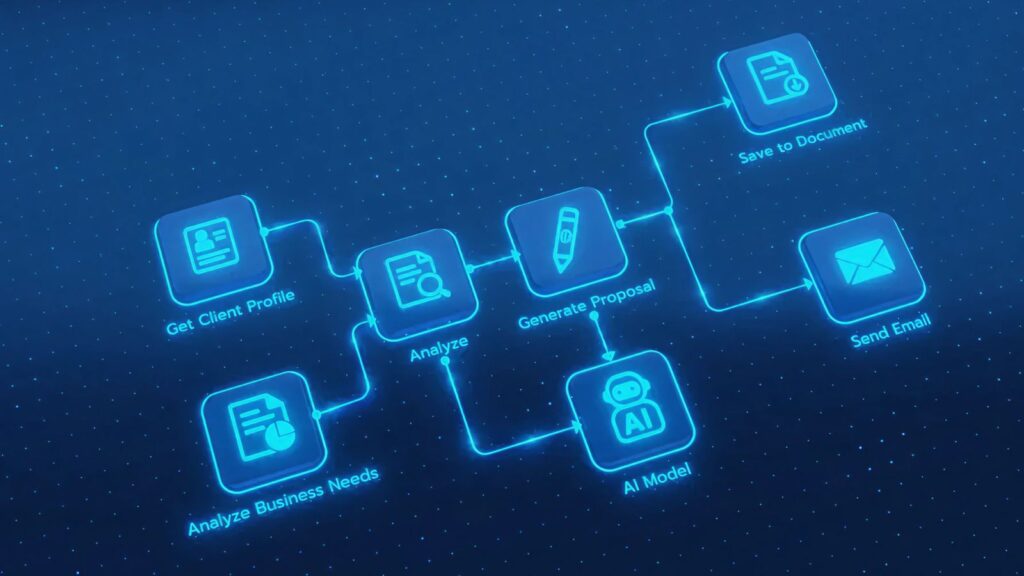
Introduction to the Agentic Era
The Agentic AI represents a revolution in the field of artificial intelligence, marking the transition from passive support systems to autonomous digital entities capable of planning, acting, and verifying independently. This new generation of AI no longer limits itself to performing tasks on request, but takes control of entire workflows with the explicit goal of achieving defined outcomes.
The end of the era of chatbots and the birth of the agentic era in 2026
Since 2026, we have witnessed the conclusion of the era dominated by chatbots and artificial intelligence as a co-pilot. In the previous years, AI was mainly seen as a tool that assisted humans, helping them with specific tasks but always under strict human control. Now, with the advent of agentic AI, we are entering an era where autonomous systems not only perform tasks but also manage them comprehensively, taking on operational and decision-making responsibilities.
Differences between co-pilot AI and autonomous AI
- AI Copilot: assists the user by providing suggestions or automating individual tasks upon request. It requires constant supervision and detailed input.
- Autonomous AI (Agentic AI): operates as an independent digital team. It plans complex strategies, makes decisions based on overall goals, and self-corrects in real-time without the need for step-by-step instructions.
This distinction is crucial to understand why the transition to agentic workflows is not simply a technical evolution but a paradigmatic change in the management of digital work.
Importance of the transition for modern businesses
Companies that adopt agentic AI solutions position themselves at the forefront of digital transformation. The ability to delegate entire operational functions to autonomous systems leads to:
- Significant reduction of cognitive load on human teams.
- Greater efficiency in resource management.
- Acceleration of decision-making processes.
- Continuous innovation thanks to the focus of people on high-value strategic activities.
For modern companies, the choice is no longer whether or not to adopt agentic AI, but how to effectively integrate it into their workflows to maintain competitiveness and agility in increasingly dynamic markets.
The agentic era represents not only a new technology: it is the foundation on which to build the autonomous teams of the future, where humans and machines collaborate synergistically for better and faster results.
Definition and Functioning of Agentic Workflows
The agentic workflow is an autonomous system designed to achieve specific goals without the need for detailed instructions. An AI goal-oriented agent receives a task, such as “increase market share in a particular sector by 10%”, and activates a series of coordinated actions to achieve this result.
Cognitive Architecture and the ReAct Cycle
At the core of the functioning of agentic workflows is the cognitive architecture, a model that integrates reasoning, action, and observation capabilities in a continuous cycle known as the ReAct cycle (Reasoning-Action-Observation):
- Reasoning: The agent analyzes the objective and plans a strategy based on the available data.
- Action: Executes operations in the digital or real world through APIs or integrated systems.
- Observation: Monitors the results of the actions taken, collecting relevant feedback.
This cycle repeats until the objective is completed or predefined conditions are met.
“The distinctive key of AI in 2026 lies in its ability for continuous self-correction during the ReAct cycle.”
Self-Correction Capabilities in AI Systems
Self-correction is what makes agent-based workflows profoundly different from previous generations of AI. During each iteration of the ReAct cycle, the agent evaluates whether the actions have produced the desired effects. If not, it modifies the adopted strategy:
- Recalibrates decision-making parameters.
- Updates operational priorities.
- Adapts the resources used.
This dynamic allows agents to manage complex and unpredictable environments without constant human supervision.
Practical Examples of Multi-Stage Workflows
Workflow agents are often organized into multiple autonomously coordinated phases. Concrete examples demonstrate how these systems transform abstract objectives into concrete, sequential, and adaptive actions.
Local Marketing Campaign
- Automated research of regional market trends.
- Customized creation of advertising content.
- Automated negotiation with local advertising platforms.
- Real-time monitoring and optimization of performance.
Supply Chain Management
- Predictive analysis of demand.
- Purchase planning based on available suppliers.
- Autonomous coordination of logistics to avoid delays.
- Review and adjustment of plans based on unforeseen events.
Software Development
- Identification of requirements through user data analysis.
- Automatic generation of boilerplate code by coding agents.
- Continuous testing and debugging with automatic correction of detected errors.
- Incremental release of software with post-distribution monitoring.
These examples show how agent-based workflows increase efficiency and reliability in daily business operations.
The Multi-Agent Ecosystem in Companies
Multi-agent systems (MAS) represent one of the most significant innovations in the digital architecture of modern companies. These systems are not simply a collection of individual agents, but rather autonomous digital teams that collaborate to achieve shared goals, replicating the synergy of human groups but with superior efficiency and scalability.
How Multi-Agent Systems Work
A MAS consists of different autonomous agents, each specialized in a specific task or business functional area. These agents:
- Plan and act independently, making decisions based on real-time data.
- Communicate and coordinate their actions through standardized communication protocols.
- Adapt their behaviors based on inputs received from other agents and the external environment.
This decentralized model promotes flexibility and resilience: if one agent encounters a problem, the others can compensate or reorganize the work without compromising the entire system.
Specialized Roles of Business Agents
In a business context, each agent assumes a specific role to maximize the overall effectiveness of the system:
- Sourcing Agent: monitors supplies, identifies potential risks such as material shortages or delays from suppliers, and proposes alternative solutions.
- Logistics Agent: manages shipment planning, optimizes routes, and dynamically responds to unforeseen events such as adverse weather conditions or disruptions in the distribution chain.
- Finance Agent: evaluates the economic impact of operational decisions, recalculates budgets and cash flows, authorizes expenses within predetermined limits.
- Communication Agent: is responsible for notifying internal and external stakeholders, updating customers on delivery times or operational changes through appropriate channels.
Each of these agents operates autonomously but maintains a shared vision of business objectives through multi-agent collaboration.
Communication Protocols between Agents
Communication between agents occurs through inter-agent protocols, structured languages that allow for rapid and precise exchange of information. These protocols ensure:
- Transparency in intentions and shared data.
- Synchronized coordination of distributed activities.
- Automatic negotiation capability to resolve conflicts or conflicting priorities.
Agents can send messages such as support requests, action confirmations, or anomaly reports. The standardization of protocols facilitates integration between different technologies and business platforms.
Practical Example: Coordination in the Supply Chain
Imagine a supply chain managed by a multi-agent system:
- The Sourcing Agent detects a possible shortage of raw materials caused by an incoming storm.
- It communicates the alert to the Logistics Agent, who recalculates alternative routes to avoid delays in deliveries.
- The Finance Agent evaluates the economic impact of the diversion and approves any additional costs within the allowed limits.
- The Communication Agent sends timely updates to customers and relevant internal departments.
In this way, the system proactively responds to unforeseen events while maintaining operational fluidity without the need for immediate human intervention.
The multi-agent model transforms business management from a complex manual intertwining to an intelligent and autonomous network of digital teams that synergistically work towards common strategic objectives. The ability of specialized agents to effectively cooperate through shared protocols makes it possible to tackle complex situations with unprecedented speed and precision.
Reduction of Human Cognitive Load with Agentic AI
The adoption of agentic workflows leads to a significant reduction of human cognitive load in modern companies. This happens because autonomous AI agents take on the responsibility of making low-level decisions, freeing human resources from repetitive and coordinating tasks that have absorbed a large part of attention and mental energy until now.
Freeing Human Resources from Repetitive Tasks
- Delegating routine activities such as data entry, process monitoring, or management of standard requests allows operators to focus on more strategic activities.
- The agents automatically manage information flows and coordinate actions smoothly, reducing the need for continuous manual interactions.
- In this way, operational efficiency increases without overloading collaborators with micro-decisions.
Growth of Creativity and Innovation
The human focus shifts from “doing” to “thinking”. When workers are no longer immersed in administrative or coordinating tasks, they can dedicate themselves to:
- Development of new ideas,
- Strategic planning,
- Innovation in processes and products.
This change in role stimulates a more dynamic work environment, where creativity becomes the true engine of business growth. The combination of human intelligence and agentic AI generates highly productive synergies.
Code Automation with Coding Agents
One of the sectors most affected by the agentic revolution is software development. Coding agents are concrete examples of how automation can scale:
- They manage up to 80% of boilerplate code,
- They automatically generate templates, recurring functions, and standardized scripts,
- They allow human developers to fully focus on complex architectures and user experience.
This division of labor drastically reduces development time and costs, accelerating time-to-market.
Agentic AI Workflows: The Transition from Copilots to Autonomous Teams summarizes this evolution: no longer simple digital assistants (copilots) but autonomous teams that execute entire operational chains independently and integratively.
Measurable Impacts on Productivity
Companies that integrate agentic workflows report:
- Decreased burnout from cognitive overload,
- Greater job satisfaction for employees,
- Tangible increase in productivity due to focus on high-value-added activities.
These benefits reflect a qualitative change in the way work is organized and carried out, introducing a new era in which artificial intelligence not only supports but acts as an autonomous operational partner.
Auditor agents: continuous monitoring as a pillar of security
A key element in the advanced management of autonomous systems is represented by auditor agents. These are specialized agents in:
- Constant monitoring of the activities of operational agents.
- Early identification of anomalies, deviations from policies, or potential vulnerabilities.
- Automatic reporting to human operators or direct intervention to contain risks.
This form of AI-on-AI supervision allows for complete real-time coverage, which is impossible to achieve with human intervention alone, given the complexity and speed of operations.
Automated Supervision: Guarantee of Ethical Compliance and Safety
The combination of guardrail frameworks and auditing agents creates a protective network that keeps agents within ethical and regulatory limits. The system is designed to:
- Ensure transparency in autonomous decisions.
- Allow human intervention in critical moments (decision threshold).
- Prevent potentially harmful abuses or deviations.
A dynamic governance model is established in which autonomy is balanced by rigorous and continuous control, ensuring that technology serves business interests without compromising safety and accountability.
Ethical Implications and Human Supervision in Agent Workflows
The introduction of autonomous agents into business activities requires careful consideration of the ethical considerations of autonomous AI. It is not just about operational effectiveness, but about establishing clear and shared limits to ensure that decisions made by artificial intelligences respect fundamental principles of responsibility, transparency, and respect for human rights.
Ethical Rules for Autonomous Agents
Defining ethical rules in the operation of digital agents is an essential priority. These rules:
- Prevent behaviors that may cause direct or indirect harm to individuals or groups.
- Ensure fairness in automated decisions, avoiding discrimination based on partial data or biases inherent in algorithms.
- Promote transparency, so that every action of the agent can be traced and justified in an understandable way.
These constraints are not simply abstract guidelines, but concrete parameters integrated into the very design of agent workflows.
Human Supervision and Decision Threshold
Human supervision in autonomous systems maintains a strategic role especially when it comes to sensitive decisions or those with significant impacts. The concept of decision threshold for human intervention represents an effective mechanism to balance autonomy and control:
- Agents can operate freely within defined limits, managing routine or low-risk tasks without the need for human input.
- When an action exceeds certain critical thresholds – for example, relevant legal, ethical, or financial implications – the system requires approval or review from a human supervisor.
- This model avoids both the risk of uncontrolled errors and the inefficiency caused by indiscriminate constant oversight.
Models of Ethical Governance
To effectively govern autonomous digital teams, companies adopt models that combine functional autonomy with responsible human control. Some common elements include:
- Integrated compliance policies, which translate regulations and ethical codes into operational rules for agents.
- Accountability frameworks, where every decision is attributable to both the machine and the responsible human counterpart monitoring it.
- Dynamic feedback processes, which allow humans to intervene promptly in case of deviations from the expected behavior of the agent.
- Continuous training for human operators to understand the technical and ethical limits of autonomous systems and know how to intervene correctly.
These models create a virtuous balance between the operational power of digital agents and the essential need for human responsibility, which is fundamental to maintaining trust and legitimacy in the use of autonomous AI within organizations.
The Future of Work with Autonomous Teams and Digital Employees
The future of work with autonomous AI is shaping up to be an ecosystem where the interaction between humans and digital agents becomes the norm. They are no longer passive tools, but rather true autonomous collaborators who perform complex tasks, allowing people to focus on strategic and creative decisions.
Collaboration between Guiding Humans and Executive Agent Teams
Imagine a work environment where:
- Humans define clear and strategic objectives.
- Teams of autonomous agents plan, act, and verify results independently.
- Human supervision only intervenes for critical actions or ethically sensitive decisions.
This configuration transforms the human role from “direct executor” to leader and orchestrator of digitized processes. People become mentors, innovators, and quality controllers of automated activities.
Evolution of Professional Roles in Managing Digitized Teams
The spread of digital employees in companies drives a profound transformation in professional profiles:
- New roles such as Digital Workforce Manager, specialized in coordinating autonomous agents, are emerging.
- The importance of experts in digital ethics is growing, as they are responsible for defining moral parameters and decision-making thresholds for the agents.
- Technical staff is increasingly focusing on the design of advanced agent-based workflows and systemic integration between different specialized agents.
This evolution requires cross-functional skills that combine technological capabilities, strategic vision, and ethical sensitivity.
Competitive Advantages of Agentic AI-Based Workforce
Adopting an automated workforce based on agentic AI generates tangible benefits for companies:
- Significant increase in productivity due to the reduction of time spent on repetitive or coordinating tasks.
- Acceleration of innovation as human resources focus on design, creativity, and development of new products or services.
- Greater agility in responding to market changes with flexible workflows that self-adapt in real-time.
- Reduction of operational costs through intelligent automation that minimizes errors and inefficiencies.
Companies that effectively integrate these systems build a competitive advantage that is difficult to replicate, positioning themselves as leaders in the digital age.
Agentic AI Workflows: The Transition from Copilots to Autonomous Teams is not just a technological evolution but a cultural revolution. It changes the very way of working, collaborating, and creating value within organizations.
The future is already here: digital autonomous teams accompany human beings capable of leading them with intelligence, ethics, and strategic vision.
Conclusion
Digital transformation has reached a new frontier with the evolution from copilots to autonomous teams. The era of chatbots and passive assistants gives way to agentic workflows, systems capable of planning, acting, and verifying completely autonomously. This transition marks the shift from simple task automation to the autonomous execution of entire business processes, redefining the role of artificial intelligence in modern business.
Companies that adopt agentic AI experience significant strategic impacts:
- Greater operational efficiency thanks to the ability of agents to self-correct and adapt in real-time.
- Reduction of human cognitive load, freeing up valuable resources for high-value creative and decision-making activities.
- Increased competitiveness through the use of specialized digital teams that collaborate seamlessly.
- Better governance and security with dedicated frameworks to ensure ethical and reliable decisions.
This change is not just about technology, but deeply involves corporate culture and organizational models. The digital transformation with agentic AI requires a rethinking of strategies, skills, and human oversight.
The future is no longer just “support” but full “executive autonomy”: an ecosystem where humans guide the strategic vision while autonomous agents concretely achieve the objectives.
The challenge for every entrepreneurial reality is clear: to quickly adapt to this advanced digital era in order not to fall behind in an increasingly competitive market. The competitive advantages of full AI autonomy are now within reach, but only for those who will be able to effectively integrate these new digital teams into their organizational structure.
The adoption of Agentic AI Workflows therefore represents not only a technological choice, but a true cultural and strategic evolution. Are you ready to lead your company in this revolution?
Frequently Asked Questions
What is Agentic AI and how does it differ from co-pilot AI?
Agentic AI represents a new generation of goal-oriented autonomous artificial intelligence that goes beyond the role of a simple co-pilot. Unlike co-pilot AI, which assists the user in specific tasks, Agentic AI operates as an autonomous digital team capable of reasoning, action, and self-correction, marking the end of the era of traditional chatbots by 2026.
How do agentic workflows work and what is their operational cycle?
Workflow agents are autonomous systems designed to achieve specific goals through a cognitive architecture based on the ReAct (Reasoning-Action-Observation) cycle. This structure allows agents to perform multi-stage processes with continuous self-correction capabilities, ensuring efficiency and adaptability in business operations.
What is the role of multi-agent systems in modern businesses?
Multi-agent systems (MAS) operate as autonomous digital teams within companies, where each agent performs specialized roles such as sourcing, logistics, finance, and communication. Through inter-agent communication protocols, these systems coordinate complex activities such as supply chain management, improving collaboration and productivity.
How does Agentic AI contribute to reducing human cognitive load?
Agentic AI delegates low-level decisions to autonomous agents, freeing up human resources from repetitive and coordinative tasks. This allows professionals to focus on high-value-added creative and strategic activities, significantly increasing productivity and fostering innovation, even through coding automation with coding agents.
How is the autonomy of digital agents balanced with human oversight and ethics?
It is essential to define clear ethical rules for autonomous agents and establish decision thresholds that require human intervention in sensitive or critical situations. An effective governance model combines operational autonomy with responsible human control, ensuring a balance between technological innovation and ethical responsibility in companies.