
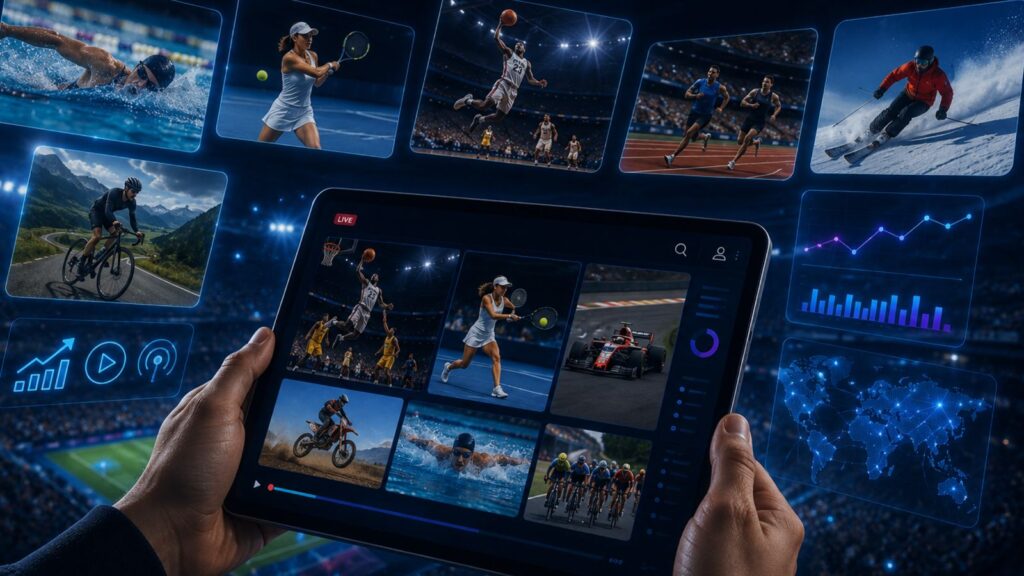
Introduction to the Revolutionary Impact of Artificial Intelligence in Sports 2026
We are living in a historic era defined by the Artificial Intelligence boom, a period of global excitement that is transforming every sector—from technological development and healthcare to marketing and education. Sports are no exception: AI is quickly establishing itself as a strategic tool to innovate and enhance every aspect of the discipline, from athlete training to fan engagement.
The year 2026 stands out as a pivotal moment for the widespread and practical adoption of artificial intelligence in sports. This is not just a fleeting trend driven by media hype, but the culmination of years of technological advancement and real-world experimentation that have delivered concrete results. AI solutions have evolved from experimental tools into established standards across many professional teams.
Main Areas of Transformation in 2026:
- Athlete performance: AI optimizes training routines, helps prevent injuries, and supports personalized strategies by analyzing biometric and physical data collected in real time.
- Fan experience: Automated multilingual commentary, interactive content, and immersive experiences powered by artificial intelligence are transforming the way audiences engage with sports.
- Sports marketing and TV rights: Personalized marketing campaigns based on fan behavior and predictive management of digital content demand are revolutionizing the business side of sporting events.
It’s crucial to distinguish between the media hype that often surrounds new AI developments and the concrete applications that are truly transforming the world of sports. While many press releases highlight futuristic promises, few accurately describe the measurable results achieved so far. The challenge for industry professionals and fans alike is to recognize which innovations are already in operation and which remain experimental or theoretical.
The spread of AI in sports by 2026 marks a turning point of historic proportions. The integration of machine learning, advanced data analytics, and predictive models is redefining every stage of the sports cycle: from athletes’ physical preparation to the emotional engagement of fans, all the way to the economic management of broadcasting rights.
This exploration of the revolutionary impact of Artificial Intelligence in the world of sports in 2026 paves the way for a deeper understanding of technology’s true potential when applied to athletics, highlighting how digital innovation is becoming an essential element for competing at the highest level.
Optimizing Athlete Performance Through Artificial Intelligence
Injury Prevention: A Tangible Success Story for AI
Optimizing athlete performance inevitably hinges on the ability to prevent injuries—a crucial challenge for professional teams and sports organizations. Artificial intelligence has proven to be an effective and reliable tool for predicting injury risk before it occurs, enabling timely and targeted interventions.
How does AI-powered injury prevention work?
- High-frequency biometric data collection during training sessions and matches, including parameters such as heart rate, acceleration, biomechanical load, and stride variability.
- Application of machine learning models that analyze large volumes of historical and real-time data to identify predictive patterns related to potential muscle or joint injuries.
- Integration of workload data with clinical information and injury history to generate early alerts about individual risk levels.
An advanced GPS tracking system combined with biomechanical analysis enables comprehensive monitoring of every athlete’s movement, providing a dynamic overview of their physical condition. This approach goes beyond the limitations of simple human observation or subjective assessments, which are often neither timely nor sufficiently accurate.
Economic and strategic impact of injury reduction
- Significant decrease in forced absences due to injuries that previously disrupted the continuity of athletic performance.
- Reduction in costs associated with medical treatments, rehabilitation, and temporary or permanent player replacements within the team roster.
- Greater stability in team strategies thanks to the consistent availability of key players throughout the competitive season.
- Increase in athletes’ market value due to more efficient management of their physical condition and prevention of chronic injuries.
Professional teams that have implemented artificial intelligence-based systems report a reduction in muscle injuries exceeding 40% within the first year of use, with further improvements observed in subsequent years. These figures translate into tangible competitive advantages on the field and more sustainable financial management for clubs.
Artificial intelligence not only identifies risk situations but also helps uncover the root causes of injuries, guiding technical staff in designing safer and more effective training programs. The digital transformation of sports methodologies is thus ushering in a new era where technology becomes an indispensable ally for maximizing performance while safeguarding athletes’ physical integrity.
Personalized Training and Continuous Monitoring
Today, professional athletes’ training routines rely on high-frequency data collection, made possible by advanced GPS tracking technologies, biometric sensors, and biomechanical analysis. Each session generates thousands of data points per second, including:
- Heart rate
- Acceleration and movement speed
- Stride variability
- Biomechanical load on muscles and joints
Manually managing these massive volumes of data is impossible without the help of artificial intelligence. AI interprets raw data and transforms it into actionable insights to design training strategies tailored to each athlete.
How does AI optimize athletic performance?
- Real-time monitoring: Wearable sensors continuously transmit data during training sessions.
- Predictive analysis: Machine learning models identify patterns that signal fatigue or injury risk.
- Dynamic adaptation: Training programs automatically adjust based on the athlete’s physical condition.
- Objective feedback: Data provides an accurate picture of physical status, often more reliable than the athlete’s own perception.
This approach not only helps prevent injuries but also enables continuous improvement in athletic performance. Smart sports medicine leverages these tools to accurately assess muscular and biomechanical conditions, allowing for timely intervention when signs of stress or overload appear.
Concrete Examples
- Professional teams across various sports use AI systems to monitor individual workloads, significantly reducing muscle injuries.
- Predictive models based on machine learning can anticipate injury risk up to a week before it actually occurs.
- Biomechanical analyses make it possible to correct potentially harmful movements during training sessions.
The result is a personalized path that takes into account each athlete’s unique characteristics: age, medical history, physical abilities, and playing style. Such a level of detail was unimaginable just a few years ago.
Impact on Training Efficiency
The combined use of GPS tracking and AI algorithms transforms vast amounts of data into precise tactical decisions. Athletic trainers can plan targeted sessions to develop strength, speed, or endurance without overloading the athlete’s body.
“Training is no longer a matter of intuition or subjective experience, but a science grounded in objective data and advanced analysis.”
This marks a true revolution in the daily management of professional athletes, bringing clear benefits both to performance and athletic longevity. Artificial intelligence has become an essential ally for anyone aiming to maximize results while minimizing risks.
AI’s ability to integrate complex biometric information with environmental and historical parameters is opening up new frontiers in personalized training, laying the groundwork for a new era of professional sports that is increasingly data-driven.
Scouting and Talent Evaluation through Artificial Intelligence
Traditional sports scouting has always relied on direct observation, coaches’ experience, and often qualitative data. The growing availability of quantitative data has ushered in a new era: talent evaluation powered by artificial intelligence. AI leverages vast amounts of data collected during matches, training sessions, and physical tests to analyze every aspect of athletic performance.
The Shift Toward Data-Driven, AI-Based Methods
The data-driven approach overcomes the limitations of simple human observation:
- Objective quantification: speed, strength, endurance, and biomechanical movements are measured with pinpoint accuracy.
- Analysis of complex patterns: AI detects hidden trends in data that often escape the human eye.
- Potential prediction: algorithms can estimate an athlete’s future development based on historical and comparative data.
Professional NBA and MLB teams have integrated predictive models into their Draft processes, improving the quality of their selections compared to traditional scouting methods.
Overcoming human bias in athlete selection
Human judgment is influenced by:
- Biases related to physical traits such as height or body type.
- Personal preferences and cultural stereotypes.
- External factors like a player’s popularity or geographic background.
AI models, on the other hand, evaluate only objective data, drastically reducing these biases. For example:
- The spin rate of a baseball pitch is analyzed without considering the pitcher’s reputation.
- In the NBA, a young prospect’s potential is assessed using technical and statistical parameters that go beyond scouts’ subjective impressions.
This neutrality helps uncover less obvious talents who might otherwise be overlooked in a traditional selection process.
Current Limitations of AI in Scouting
Despite technological advancements, there remain crucial aspects that are difficult to quantify:
- Work ethic: dedication and commitment during off-season training.
- Ability to handle pressure: mental resilience in decisive moments doesn’t clearly emerge from biometric or statistical data.
- Psychological factors: intrinsic motivation, teamwork attitude, leadership skills.
These factors are fundamental for long-term success but still remain beyond the reach of artificial intelligence. For this reason, the role of scouts remains irreplaceable as a complement to data-driven analysis.
“Artificial intelligence does not replace human judgment but enhances it with precision and rigor.”
The combination of human experience and computational power now represents the most effective frontier for modern sports scouting.
Transforming the Fan Experience Through Artificial Intelligence
The fan experience transformed by AI stands out as one of the most remarkable and valued revolutions in the world of sports. Artificial intelligence is redefining how fans experience and engage with matches, introducing innovations that go far beyond simply watching the event.
Automated Multilingual Commentary
AI-powered automated commentary technologies enable a more inclusive and personalized live experience. Advanced systems can generate real-time commentary, adapting to different languages and communication styles without human intervention.
- Allow users to choose from multiple language options.
- Adjust the level of detail based on the listener’s expertise, from casual viewers to die-hard fans.
- Ensure continuity even during events with a shortage of human commentators or simultaneous broadcasts across multiple platforms.
This technology reduces costs and broadens global access to sporting events, creating a direct bridge between fans and live action.
Immersive Experiences and Shared Reality Enhanced by AI
Artificial intelligence powers immersive experiences that are transforming the traditional way spectators perceive sports:
- Augmented Reality (AR) and Virtual Reality (VR) integrated with AI allow fans to experience key moments from unique perspectives, such as the athlete’s point of view or previously inaccessible angles.
- AI systems analyze biometric and environmental data to generate dynamic virtual environments that adapt to the emotions and reactions of the audience.
- AI-powered social platforms create shared spaces where users can interact in real time, exchange opinions, personalized statistics, and exclusive content.
This approach fosters deep emotional engagement, transforming passive viewers into active participants in the sports narrative.
Democratizing Access through Smart Platforms
AI-driven smart sports platforms are breaking down traditional barriers to content access:
- They aggregate live streams, highlights, statistics, and on-demand content from various sources.
- They use recommendation algorithms to personalize offerings based on individual tastes and user behavior.
- They make it possible to follow minor events or lesser-known leagues with the same quality as major international competitions.
The ability to easily access diverse content expands the fan base and broadens the global reach of sports.
The integration of artificial intelligence into sports consumption goes beyond technical improvements—it profoundly shapes the emotional, cultural, and social interactions of fans within the new digital ecosystem.
Revolutionizing Sports Marketing and TV Rights with Artificial Intelligence
The use of AI technologies in sports marketing is radically transforming how sports organizations and broadcasters engage with fans and monetize content. The year 2026 marks a pivotal moment for the widespread adoption of AI-driven solutions that enable personalization, optimization, and automation of processes that were once unimaginable.
Advanced Personalization of Marketing Campaigns
Sports marketing platforms now incorporate sophisticated AI-powered behavioral analytics systems. These tools collect and interpret data from:
- Social media interactions
- Purchase preferences
- Ways fans experience live and on-demand events
- Emotional feedback through sentiment analysis
AI segments the fanbase into micro-groups with specific characteristics, allowing for hyper-targeted advertising campaigns. This approach boosts engagement and significantly increases return on investment compared to traditional strategies.
For example, a football club can send personalized offers for merchandise or VIP tickets based on specific consumption habits detected by AI, avoiding generic and costly messages.
Optimizing TV Rights Management
Television rights are one of the main economic assets in the sports world. Artificial intelligence applied to predictive models enables:
- Accurate forecasts of content demand based on variables such as match time, opponent, and athletes’ form
- Dynamic analysis of digital consumption to help adjust offerings in real time
- Identification of emerging markets and potential new audience segments
With this information, operators can negotiate more favorable deals, optimize the scheduling of broadcast matches, and maximize advertising revenue. A concrete example is the constant monitoring of streaming access during key events to decide whether to extend the offer or introduce new personalized packages.
Automated Production of Multimedia Content
Creating engaging content is essential to keep fans’ attention high. AI has introduced intelligent virtual agents, like those offered by services such as elaiagent.com, capable of autonomously generating videos, highlights, summaries, and in-depth analyses.
These digital agents process real-time data, producing dynamic multimedia material tailored to the specific interests of the audience. The advantages are numerous:
- Drastically reduced production times compared to traditional methods
- Ability to create customized versions of content for different platforms (social media, mobile apps, TV)
- Increased engagement thanks to interactive and adaptive storytelling
This allows sports teams to maintain a steady flow of fresh content without overburdening internal or external human resources.
The integration of artificial intelligence into sports marketing and TV rights management not only opens up new economic opportunities but also profoundly changes the relationship between clubs, broadcasters, and fans. These developments mark a true revolution in the sports business, which will become even more established in 2026 with increasingly precise and effective tools.
Limits and Risks of Artificial Intelligence in Sports Today
The growing adoption of Artificial Intelligence in sports brings with it a range of challenges and critical issues that deserve careful consideration, especially to prevent negative consequences in the long run. Understanding the limitations and risks of AI in sports is essential for integrating these technologies responsibly and effectively.
Differences between human interpretation and algorithmic analysis
AI relies on quantitative data, statistical models, and patterns identified through machine learning. However, this algorithmic analysis cannot replace the complexity of human interpretation:
- Subjective context: The experience of coaches, athletic trainers, and sports doctors takes into account emotional, motivational, and psychological factors that are difficult to translate into numbers.
- Cognitive flexibility: A coach can adapt decisions in real time based on intuition or unexpected events, while an algorithm follows predetermined rules.
- Data bias: AI models can suffer from biases related to the quality or representativeness of the initial data; errors or gaps in datasets affect predictions and recommendations.
Risks arising from excessive reliance on automation
Relying too heavily on AI for team management or strategic decisions can lead to significant issues:
- Over-reliance on technology: Depending solely on AI systems risks diminishing the critical role of human judgment, which is essential for assessing complex or unprecedented situations.
- Loss of creativity and adaptability: Sports also demand improvisation and the ability to reinvent strategies; excessive automation could make tactics too uniform, stifling tactical innovation.
- Systematic errors: If a flawed model is implemented without human oversight, mistakes can quickly spread throughout the sporting environment.
Ethical concerns: privacy and transparency
The large-scale collection of athletes’ biometric and physiological data raises important ethical questions:
- Data privacy: Sensitive information such as heart rate, biomechanical load, and medical history must be handled with strict care to prevent misuse or unauthorized disclosure.
- Informed consent: Athletes must be clearly informed about how their data will be used and retain control over who can access this information.
- Algorithm transparency: AI-driven decision-making processes need to be explainable; lack of clarity in models undermines the trust of stakeholders (athletes, coaching staff, fans).
- Impact on career and reputation: Automated decisions could negatively affect important professional choices (e.g., player selection) if not accompanied by human oversight and safeguards.
The greatest challenge lies in balancing the tangible benefits offered by AI with a mindful approach to managing potential risks. Only in this way can artificial intelligence truly support sports without compromising fundamental values such as fairness, health, and respect for individuals.
Conclusion
The year 2026 marks a turning point in the adoption of Artificial Intelligence in sports, with innovations that have already redefined several key aspects:
1. Optimization of athletic performance
Injury prevention through AI systems like Zone7 and Digital Athlete has shown tangible results, significantly reducing downtime and improving workload management. Personalized training sessions, based on real-time data collection, enable targeted strategies that maximize each athlete’s potential.
2. Fan Experience Revolutionized
Automated multilingual commentary technologies, augmented reality, and intelligent platforms are democratizing access to sports content, offering increasingly immersive and personalized experiences.
3. Sports Marketing and TV Rights Transformed
Advanced behavioral analysis of fans enables more effective advertising campaigns, while predictive models optimize the management and monetization of digital rights.
The technological evolution expected for 2026-2027 will focus on:
- Increasing integration between AI and biotechnology, with ever more advanced sensors enabling non-invasive, real-time monitoring of physical condition.
- Enhancement of machine learning algorithms that will be able to interpret cultural and psychological aspects previously overlooked by quantitative analysis, thus enriching scouting and coaching processes.
- Expansion of immersive experiences thanks to artificial intelligences capable of creating highly realistic interactive virtual environments, fostering new forms of engagement for all enthusiasts.
Responsible use of AI requires a balance between technology and human expertise. The ability of coaches, scouts, and managers to interpret data within a human context remains irreplaceable. Only through this synergy can the revolutionary potential of artificial intelligence in sports be fully realized.
Innovation should not replace the human contribution but rather expand its possibilities, making the world of sports safer, more accessible, and more exciting for athletes and fans alike.
The challenge ahead will be to maintain a high quality relationship between humans and machines, ensuring transparency, ethics, and sustainability in the adoption of new technologies. By following this path, unprecedented opportunities will open up for the entire sports ecosystem in the coming years.
Frequently Asked Questions
What is the revolutionary impact of Artificial Intelligence on the world of sports in 2026?
In 2026, Artificial Intelligence is profoundly reshaping the sports industry by optimizing athlete performance through injury prevention and personalized training, enhancing fan engagement, and transforming sports marketing and broadcasting rights.
How does AI help prevent injuries among professional athletes?
AI leverages predictive models based on machine learning to analyze biometric data and GPS tracking, identifying injury risks in real time. This enables professional teams to significantly reduce injuries, resulting in positive economic and strategic outcomes.
How do AI-powered personalized training programs improve athletic performance?
By analyzing biomechanical data collected at high frequency during training sessions, AI develops tailored strategies for each athlete. Continuous monitoring allows for real-time adjustments to workouts based on actual physical condition, moving beyond subjective assessments.
How is sports scouting changing thanks to artificial intelligence?
Traditional scouting is evolving towards data-driven, AI-based methods that use predictive models to assess talent. These systems overcome human biases, providing more objective and accurate evaluations to identify potential champions.
How is Artificial Intelligence transforming the fan experience in the sports industry?
AI personalizes fan interactions through behavioral data analysis, delivers tailored content, and enhances the enjoyment of sporting events. Additionally, it is revolutionizing sports marketing and TV rights management by creating new opportunities for engagement.