
Introducing Agentic AI and Its Role in Modern Enterprises
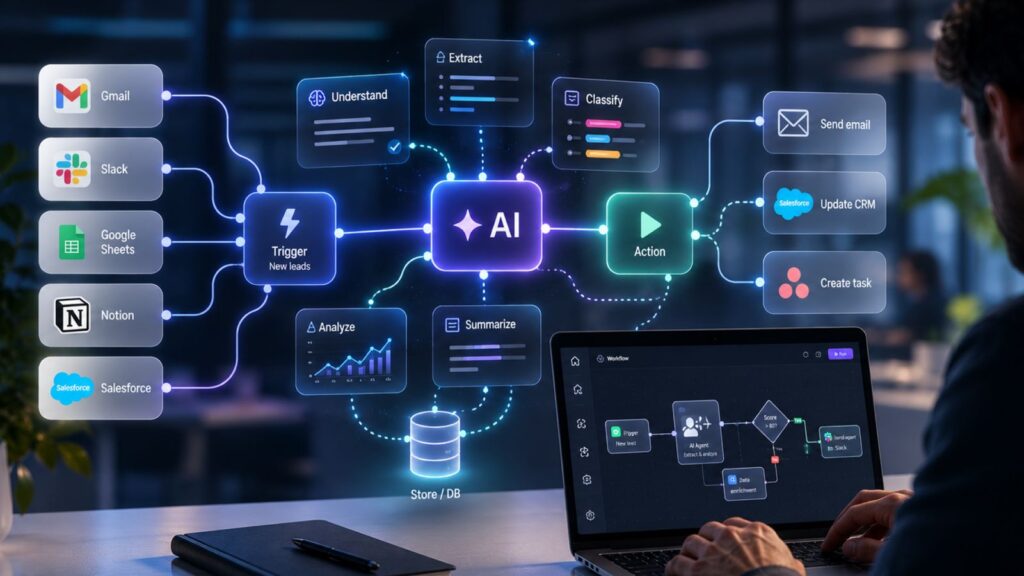
Artificial intelligence has taken a major leap forward with the arrival of Agentic AI, an evolution that goes beyond traditional generative AI. While generative AI is limited to creating content—such as text, images, or code—based on specific inputs, Agentic AI introduces something entirely new: autonomous systems capable of managing entire business processes without human intervention, effectively becoming true digital collaborators.
What is Agentic AI?
Agentic AI stands out for three main characteristics:
- Autonomous systems: These systems understand strategic objectives and can plan multi-step actions without the need for constant supervision.
- Interaction with business software: Agentic AI can communicate with various tools used within a company, carrying out complex tasks that require coordination across multiple stages.
- An evolution of generative AI: This new form of artificial intelligence represents a natural progression from generative AI, thanks to improvements in reasoning abilities and the integration of different types of data.
Why it matters so much for businesses
The arrival of Agentic AI in the business world is not just a technological upgrade, but a true revolution in how companies operate:
- Full automation: Complex workflows that once required constant human intervention can now be managed autonomously.
- Time and error reduction: Repetitive or highly complex tasks are completed faster and with fewer mistakes thanks to automation.
- Focus on strategic activities: Human resources can dedicate themselves to high-value tasks, such as creative and strategic decision-making.
“Digital colleagues” in the workplace
More and more companies are integrating intelligent agents into their teams:
- Autonomous management: Agents can handle emails, update CRMs, and monitor financial data with minimal supervision.
- Active support: These systems provide assistance for analysis, reporting, and even operational decisions.
- Synergistic collaboration: The cooperation between humans and AI agents leads to better results in terms of productivity and performance quality.
Agentic AI is no longer science fiction: it’s the new reality of technological innovation in business. Ignoring its impact means losing competitiveness in a market increasingly driven by digital efficiency.
In the following chapters, we’ll explore how this technology is transforming key industries and which trends are accelerating its widespread adoption.
The Shift from Generative AI to Agentic AI: A Paradigm Change
Generative AI has revolutionized the way companies interact with technology. Models like GPT or DALL-E have been able to create text, images, and code from simple prompts, opening up new creative and operational possibilities. However, their main function remained to respond to user requests, without autonomous planning or independent execution capabilities.
Key Differences Between Generative AI and Agentic AI
- Generative AI: produces outputs based on direct input, without the ability to autonomously manage tasks.
- Agentic AI: operates as an autonomous system capable of understanding complex goals, planning strategies, and completing multi-step workflows without constant human intervention.
- Agentic AI goes beyond simply “completing” text or code; it integrates information, makes decisions, and interacts with various software tools to achieve specific outcomes.
How Agentic AI Executes Complex, Multi-Step Processes Independently
These systems are designed to handle intricate workflows that require multiple coordinated steps. For example:
- An agent can analyze raw financial data, identify emerging trends, generate summary reports, and automatically send notifications to relevant teams.
- In the legal sector, Agentic AI can review thousands of court documents, extract relevant precedents, and suggest legal strategies without ongoing supervision.
- Interaction with external systems happens autonomously: updating CRMs, managing emails, or even performing software quality control can be delegated to intelligent agents.
This capability stems from the combination of advanced reasoning models (cognitive density) and multimodal integration, which allows the agent to contextualize complex information from various sources (text, images, audio).
Predictions on the Adoption of Intelligent Agents in Enterprise Applications
Tech industry experts foresee rapid growth in the integration of intelligent agents within businesses. Gartner estimates that by the end of 2026, about 40% of enterprise applications will include AI agents specifically designed for autonomous tasks—a significant leap from less than 5% recorded in 2025.
The main reasons are:
- Increased operational efficiency thanks to end-to-end automation.
- Shorter decision-making times through advanced cognitive processing.
- Greater scalability in managing complex processes without a proportional increase in human resources.
In summary, technological evolution is shifting the focus from passive interaction with generative AI to active collaboration with autonomous systems that become true “digital colleagues,” capable of enhancing effectiveness and responsiveness in business activities.
The Key Trends Making Agentic AI Essential in Modern Business
The evolution of reasoning capabilities in LLMs has far surpassed simple text completion, which was characteristic of the first generation of AI. Today, language models can perform complex reasoning, crafting responses that require multiple logical steps and in-depth analysis. This qualitative leap allows businesses to entrust Agentic AI with tasks that previously demanded specialized human intervention, resulting in a significant boost in both efficiency and accuracy.
Cognitive Density: The Key to Tackling Complex Problems
A fundamental concept behind this progress is cognitive density. It refers to the model’s ability to concentrate knowledge and reasoning skills in a compact and effective manner. Cognitive density enables artificial intelligence to tackle complex problems, solving situations involving multiple variables and conditions without sacrificing accuracy or speed. In practice, this means that an AI agent doesn’t just answer individual questions but develops sophisticated strategies to achieve complex goals within a business context.
Multimodal Models: Seamless Integration of Text, Images, and Audio
One of the most innovative aspects within the Agentic AI ecosystem is multimodality. Multimodal models integrate text, images, and audio into a single, cohesive system. This capability allows intelligent agents to understand and interact with diverse types of data simultaneously, providing more comprehensive and contextualized responses. For example:
- In marketing, an agent can analyze advertising campaigns by combining promotional images with textual customer feedback.
- In the legal sector, it’s possible to process written documents and audio recordings to extract relevant information.
- In healthcare, merging visual data (such as diagnostic scans) with clinical records enhances diagnosis and patient monitoring.
Trillion-parameter models: a quantum leap in computational power
Trillion-parameter models represent one of the most advanced technological frontiers. These massive models contain billions or even trillions of parameters, enabling deep and contextual understanding of data. The ability to process vast amounts of information in a single session allows Agentic AI to manage complex workflows without interruptions or loss of coherence in its responses.
Thanks to these models, it is possible to:
- Digest hundreds of lengthy documents in just a few seconds.
- Analyze entire software codebases to identify bugs or optimization opportunities.
- Simultaneously process text, visual, and audio inputs with exceptional accuracy.
Drastic Reduction in Artificial Intelligence Operating Costs
Technological advancements have also led to a significant decrease in AI inference costs, meaning the expenses associated with running AI models at scale. More efficient architectures combined with specialized hardware have enabled a substantial drop in operational costs. This makes adopting Agentic AI accessible not only to large corporations but also to small and medium-sized enterprises.
Concrete benefits resulting from this efficiency:
- Wider adoption of AI without the need for massive upfront investments.
- The ability to implement customized solutions tailored to specific business needs.
- Increased competitiveness thanks to intelligent automation integrated into daily operations.
These trends demonstrate how Agentic AI has become essential for modern businesses. The advanced integration of LLM cognitive capabilities, full multimodality, trillion-parameter models, and reduced inference costs are opening up new operational and strategic opportunities for companies across all industries.
The Real-World Impact of Agentic AI Across Key Industries
Agentic AI is fundamentally reshaping how companies tackle complex challenges and strategic processes, taking on the role of digital colleagues who can operate with both autonomy and precision. In critical sectors such as healthcare, pharmaceuticals, finance, and banking, the adoption of these autonomous systems is now well-established and delivering tangible benefits.
Healthcare and Pharmaceutical Sectors: Simultaneous Analysis of Millions of Scientific Pages
Within healthcare AI and the pharmaceutical industry, Agentic AI enables the simultaneous consultation and processing of vast amounts of scientific data. These intelligent agents are capable of:
- Scanning millions of pages from medical literature, clinical studies, and pharmacological reports in a fraction of the time it would take humans.
- Identifying hidden patterns within complex datasets that traditional human analysis might miss.
- Supporting the discovery of new pharmaceutical compounds or quickly pinpointing promising therapies.
- Automating information synthesis to keep medical databases and treatment guidelines constantly up to date.
The efficiency in aggregating multidisciplinary information enables researchers and healthcare professionals to make more informed decisions without spending hours or days on manual reading. This accelerates pharmaceutical development and enhances the quality of healthcare services.
Finance and Banking: Autonomous Monitoring of Global Events
In the financial world, where timely information is crucial, AI agents play a key role in autonomously and continuously monitoring global events through:
- Real-time analysis of economic, political, and social news from various sources.
- Monitoring sentiment analysis on social media and financial forums to anticipate emerging trends.
- Dynamically adapting trading strategies based on geopolitical and macroeconomic data.
- Automated risk management with immediate updates on changing scenarios.
These systems do more than just collect data; they actively interpret it to provide strategic insights that support quick and effective decision-making. The result is more agile and precise capital management, with reduced risks associated with informational delays or human error.
The transition from generative AI to Agentic AI marks a decisive qualitative leap: autonomous systems are becoming true partners in modern enterprises, capable of managing entire complex processes with superior effectiveness. The ability to analyze massive volumes of information in key sectors such as healthcare and finance demonstrates just how indispensable this technology has become for contemporary business.
Software Development and Legal Services in the Age of Agentic AI
Agentic AI is transforming the way software is developed and legal services are managed, taking on the role of an autonomous collaborator in traditionally complex and labor-intensive processes.
The AI Agent as an Autonomous Collaborator in Software Development
Within development teams, agentic AI no longer simply suggests code snippets or corrects syntax errors. It evolves into a true operational partner, able to:
- Understand complex project goals and break them down into specific tasks.
- Write code modules independently, integrating seamlessly with existing frameworks.
- Review and refactor legacy code with careful attention to architectural constraints.
- Automatically test new features, flagging bugs and potential regressions.
- Collaborate with other DevOps tools to optimize continuous integration pipelines.
This advanced automation enables teams to focus on innovation, strategic design, and high-value problem-solving. Furthermore, thanks to AI agents’ ability to manage entire codebases with extensive context, it becomes possible to tackle legacy projects with unprecedented speed and accuracy.
Using Agentic AI to Analyze Massive Volumes of Legal Cases in Legal Services
In the legal sector, the sheer volume of documentation to review is often overwhelming. Agentic AI is a game-changer by offering:
- The ability to simultaneously read thousands of pages of judgments, court documents, and regulations.
- Rapid identification of the most relevant precedents for a specific case.
- Automatic summarization of key arguments to support lawyers in both defense and prosecution strategies.
- Continuous monitoring of legislative or jurisprudential updates relevant to the client.
Law firms can thus dramatically increase their efficiency, reducing time and costs without sacrificing quality or depth. The support of agentic AI also democratizes access to legal intelligence, extending capabilities typically reserved for large firms to smaller practices as well.
The growing presence of agentic AI in these two sectors highlights how its autonomous and multifaceted nature is essential for managing complex information loads without overburdening human resources. Companies that implement these systems can radically transform traditional operational models, shifting the focus toward high-level creative and decision-making activities.
The Importance of Professional Reskilling in the Age of Agentic AI
The advent of Agentic AI has fundamentally changed the way businesses operate, demanding a profound shift in the skill sets required from professionals. In this context, prompt engineering becomes both crucial and strategic.
Prompt Engineering: The New Frontier of Digital Skills
Prompt engineering is no longer just about crafting inputs for generative artificial intelligence models. It is evolving into a true discipline that shapes interactions with autonomous intelligent agents. Those who master this skill are able to:
- Break down complex objectives into clear, multi-level instructions to assign to the AI agent.
- Optimize prompts to maximize the quality and effectiveness of the responses or actions performed by the agent.
- Continuously monitor and iteratively refine the processes managed by the agent, constantly improving outcomes.
Reskilling for the Future of Work
The rise of Agentic AI is shifting human work towards high-value tasks such as strategic coordination, critical oversight, and creative project management. To navigate this transformation, a targeted professional reskilling program is essential. Reskilling focuses on:
- Prompt engineering skills, which are crucial for effectively directing AI agents within business workflows.
- Analytical abilities to interpret complex outputs generated by agents and make data-driven decisions based on automatically processed information.
- Critical thinking, necessary to validate and refine solutions proposed by autonomous artificial intelligence.
Impact on Organizations
Companies that invest in ongoing training for their employees in prompt engineering gain a decisive competitive edge. Workers become true partners to digital agents, able to:
- Customize and tailor agents to meet specific business needs.
- Fully leverage the cognitive capabilities of LLMs to solve complex problems without external intervention.
- Minimize errors and inefficiencies that stem from superficial or improper management of Agentic AI tools.
“Success in the era of Agentic AI will depend on our ability to collaborate with intelligent machines, where prompt engineering becomes the art of turning ideas into autonomous actions.”
Reskilling is therefore a crucial investment to remain relevant in today’s job market and to drive corporate innovation with awareness and effectiveness.
Integrating Agentic AI into Legacy Productivity Tools
Integrating AI with legacy software is one of the most significant challenges when adopting Agentic AI within organizations. The shift from generative AI to autonomous systems—capable of managing entire processes as true “digital colleagues”—no longer requires installing dedicated applications or fully migrating to new platforms.
Seamless Fusion
1. Direct incorporation into existing software
Agentic AI integrates seamlessly with traditional tools like Excel, Outlook, Slack, and Google Workspace. There’s no need to open separate apps to leverage its capabilities—you can interact with intelligent agents directly within the platforms you use for your daily work.
2. Familiar interfaces, advanced power
This technology works behind the scenes, enhancing classic functionalities with smart automation. For example, you can generate complex formulas or summarize reports from scattered data without ever leaving your spreadsheet.
3. Reduced operational friction
By eliminating the need to switch contexts or learn new software, this integration enables a smooth transition to automated processes. People continue using their favorite tools while Agentic AI acts as an invisible cognitive extension.
Benefits for the company
1. Increased productivity
The ability of agents to handle complex tasks in the background frees up valuable time for strategic and creative activities. Collaboration between humans and machines becomes more natural and efficient.
2. Scalability without additional infrastructure
Integrating autonomous intelligence into legacy environments allows companies to rapidly scale automated processes without major investments in new IT platforms.
3. Greater Internal Adoption
Users are more likely to embrace and use technologies that seamlessly fit into their usual workflow, rather than having to face steep learning curves or drastic changes.
Practical Examples
In the finance sector, AI agents integrated into CRM systems automatically update customer data by analyzing incoming emails and documents—no manual action required.
Within marketing teams, Agentic AI generates personalized content directly in PowerPoint and Word, drawing on the latest social trends gathered in real time—all without opening external tools.
The key is that Agentic AI doesn’t replace traditional tools; instead, it enhances them, transforming them into intelligent environments capable of managing complex workflows with increasing autonomy. This integration is one of the main drivers behind the new digital revolution in modern businesses.
Conclusion
Adopting Agentic AI is no longer optional—it’s a business imperative for companies aiming to compete in the digital era. This shift from generative AI to autonomous systems capable of handling complex processes marks a true revolution in how organizations operate and innovate.
Here’s why Agentic AI is becoming essential:
- Intelligent and independent automation: Digital agents don’t just respond to commands—they act autonomously, pursuing strategic goals and freeing up human resources for higher-value tasks.
- Seamless integration into existing workflows: Thanks to their ability to blend with legacy productivity tools, Agentic AI removes the need for separate apps, ensuring continuity and ease of use.
- Multimodal capabilities and advanced reasoning: Models that understand text, images, and audio—with high cognitive density—enable faster, more accurate decisions even for complex problems.
- Significant reduction in operational costs: The sharp drop in AI inference expenses makes these technologies accessible not only to large enterprises but also to SMEs and startups.
- Cross-sector impact on key industries: From healthcare to finance, software to legal services, Agentic AI is transforming work models and opening up new competitive opportunities.
- Need for professional reskilling: Prompt engineering is becoming a crucial skill for guiding and optimizing interactions with intelligent agents.
“The article explains the shift from generative AI to Agentic AI: autonomous systems capable of managing entire business processes as true ‘digital colleagues’. By analyzing key trends, it demonstrates how this technology has now become essential for business.”
Investing in an AI-first business strategy means placing yourself at the heart of digital transformation. Companies that quickly integrate Agentic AI into their processes gain a sustainable competitive edge, boost productivity and efficiency, and prepare their teams for future challenges.
The future of business is being built today with autonomous intelligent agents. Don’t wait for the market to outpace you. Take control of your digital evolution by adopting Agentic AI in a conscious and strategic way.
Frequently Asked Questions
What is Agentic AI and why is it important for modern businesses?
Agentic AI is an advanced form of autonomous artificial intelligence capable of managing entire business processes as genuine “digital colleagues.” Its importance lies in its ability to automate complex tasks, enhance operational efficiency, and drive technological innovation in today’s business landscape.
What are the main differences between generative AI and Agentic AI?
While generative AI primarily focuses on creating content such as text or images, Agentic AI operates autonomously, carrying out complex, multi-step processes without direct human intervention. This shift marks a paradigm change toward intelligent systems capable of acting as digital collaborators within organizations.
What technological trends are making Agentic AI indispensable in today’s business landscape?
The advancement of reasoning capabilities in large language models (LLMs), increasing cognitive density for solving complex problems, multimodal integration of text, images, and audio, along with models boasting trillions of parameters and innovations that lower the operational costs of artificial intelligence—all these are key trends making Agentic AI essential for businesses.
In which industries does Agentic AI have a tangible impact, and how is it being used?
Agentic AI is making a significant difference in sectors such as healthcare, pharmaceuticals, finance, and banking. For instance, in healthcare it can analyze millions of scientific papers simultaneously, while in finance it autonomously monitors global events. These autonomous systems enhance the accuracy and efficiency of critical processes across various industries.
Why is professional reskilling important in the era of Agentic AI?
With the rise of Agentic AI, new skills such as prompt engineering are becoming essential for effectively managing intelligent agents. Professional reskilling enables workers to adapt to this technological shift, making the most of autonomous artificial intelligence and maintaining their competitiveness in the job market.