
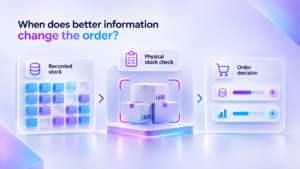
Learning-Based Inventory Management: When Is a Stock Check Worth Its Cost?
An inventory system may indicate that sufficient stock is available to meet demand, even when the quantity that can actually be sold has already fallen below what the records suggest. For retailers relying on these figures to plan replenishment, the difference can lead to delayed orders, unexpected shortages or decisions

Explainable AI in B2B Sales: What a Win/Loss Prediction Can Really Tell You
Winning a complex B2B deal often depends on details that cannot be captured by a single sales metric. A quotation may involve demanding technical requirements, a specialized product configuration, commercial conditions shaped by previous negotiations and a customer relationship that the account manager understands through years of experience. Much of
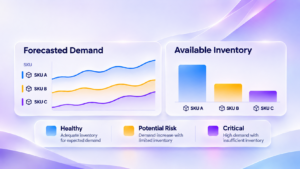
Predictive Inventory Alerts: Turning Demand Forecasts into Reliable Risk Signals
A demand planner working across hundreds of products and multiple stores may have thousands of updated forecasts to review each morning. Some will point to growing demand, others to a slowdown, and a few may suggest that available inventory is becoming misaligned with what customers are expected to buy. The
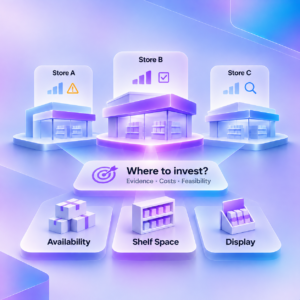
Retail Execution Optimization: Deciding Where to Invest
Retailers rarely lack opportunities to improve store execution. Across a network of locations, there may be recurring stock shortages, categories that need additional shelf space, displays that could be repositioned or assortments that no longer reflect local demand. The difficulty is deciding which of these issues deserves investment when budgets,
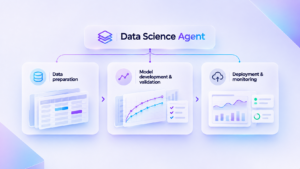
Predictive AI Without an Internal Data Science Team
For companies without a dedicated Data Science team, adopting Predictive AI can be challenging even when the business problem is clearly defined. A sales department may want to identify opportunities with a higher likelihood of conversion, while a retention team may need to recognize customers at risk of leaving or

Tabular Foundation Models vs. Gradient Boosting for Enterprise Prediction
Enterprise prediction still runs largely on rows and columns. Customer records, transactions, contract details and operational indicators support decisions about churn, purchase propensity, customer value and risk. Gradient boosting libraries such as XGBoost, LightGBM and CatBoost have become strong baselines for these tasks, combining predictive performance with mature deployment tools.

Explainable Concept Drift Detection: Understanding What Changed in a Predictive Model
A predictive model may continue producing plausible scores even after the relationships that once made those scores useful have weakened. Conventional monitoring can flag changes in inputs or performance, but the alert alone rarely identifies which relationship deserves attention. For organizations using predictions to prioritize customers, assess risk or allocate

The Best Product Assortment Is Not Necessarily the Most Popular One
A product can sell well and still be the wrong choice for a retailer’s overall assortment. When shelf space is limited and inventory commitments must be balanced against customer demand, selecting the most popular items does not necessarily produce the strongest product mix. Historical sales are an essential starting point,

Predictive Customer Service: How AI Can Identify Complaints at Risk of Late Response
When a customer submits a complaint, the service team receives information about the problem, but it cannot always anticipate how much effort will be required to respond. Some cases can be handled quickly, while others involve multiple departments, additional documentation or more complex investigations. For organizations managing large volumes of

Product Return Prediction: How Retailers Can Reduce Risk Before Checkout
A completed sale does not always translate into a profitable transaction. When a product is returned, retailers may face additional shipping, inspection, handling and restocking costs. Depending on its condition and seasonality, the item may also need to be discounted before it can be sold again. These expenses arise after

Probability Calibration in Machine Learning: Does a 90% Score Really Mean 90%?
When a predictive model assigns a customer a 90% churn score, a CRM team may reasonably consider that account a priority for retention activities, particularly if the potential loss would have significant financial consequences. Before committing resources, however, the organization needs to understand whether that percentage represents a reliable estimate
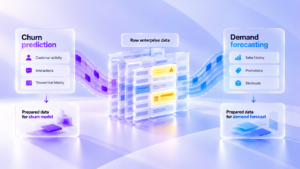
Automated Data Cleaning for Machine Learning: Why the Prediction Task Matters
Two predictive models can be trained on datasets with similar quality issues and still require very different preparation decisions. An inaccurate transaction date may affect a model designed to identify customers at risk of churn, while a missing promotional indicator could distort a demand forecast even when most of the